Inside Daeseongjeon, Seoul's Confucian Shrine Just Finished a 35-Month Restoration
Sungkyunkwan and Munmyo in Jongno reopened their main shrine hall in August 2026 after a 35-month rebuild that turned up a 1602 carpenter's inscription and an 18.8-meter roof timber. Free to enter, open daily, details checked October 28, 2026.

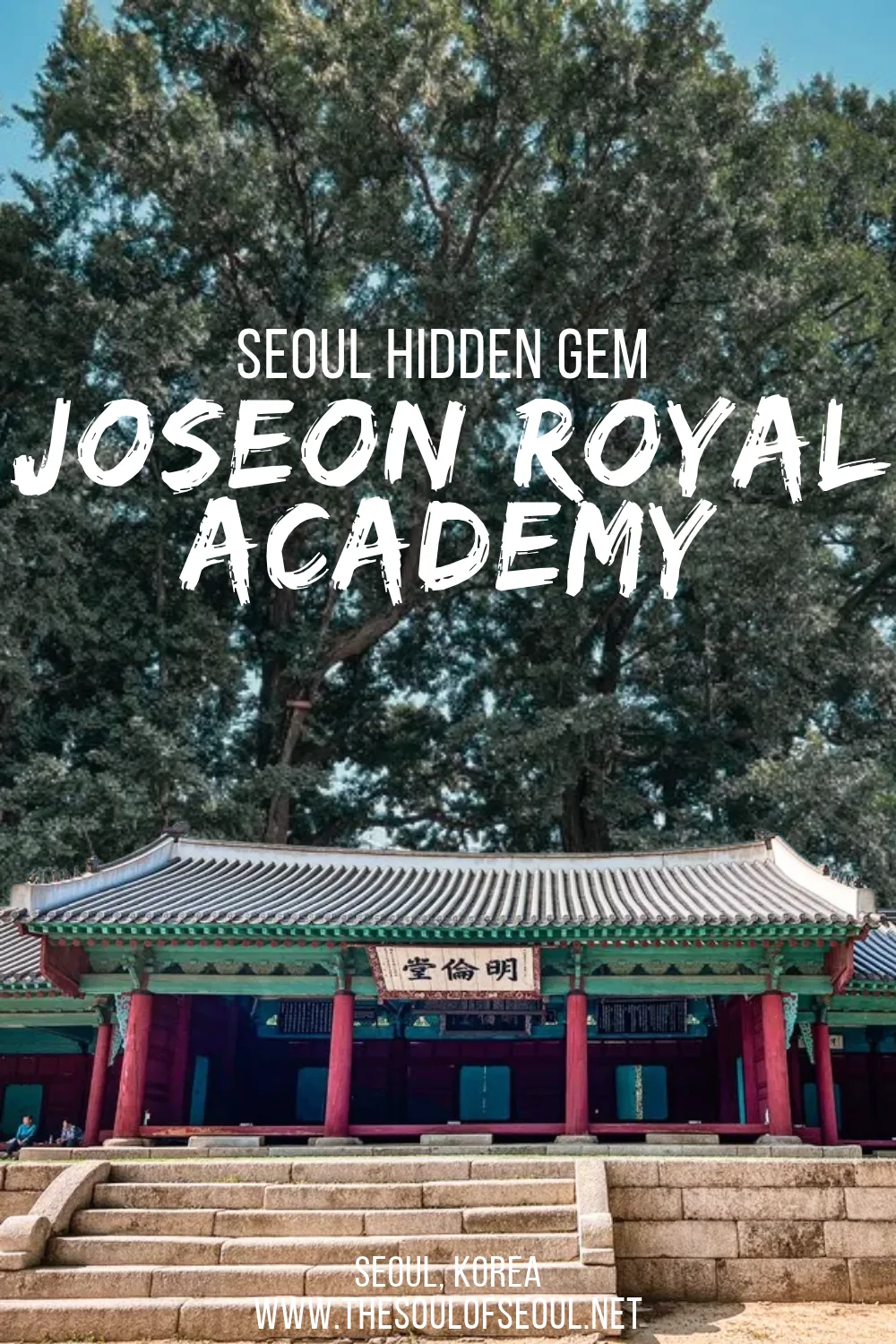
Walk through the main gate at 31 Sungkyunkwan-ro in Jongno and the noise of the street drops away within a few steps. On the left stands Munmyo, the Confucian shrine where tablets honoring Confucius and generations of Korean scholars still sit inside Daeseongjeon, the shrine's main hall. On the right spreads Sungkyunkwan, the national academy King Taejo founded in 1398 to train the officials who would run Joseon Korea. The two sites share a single walled compound, and a visitor can cross from ritual space to classroom space in under a minute, which is rare for a city where most Joseon-era institutions survive only as a single restored building or a name on a map.
Daeseongjeon just reopened after a 35-month restoration. The Cultural Heritage Administration ordered the project after a 2021 survey by the National Institute of Korean Heritage found the northeast eave sagging. Crews began disassembling the roof in September 2023 and finished in August 2026, using handmade roof tiles and pigments mixed to match historical formulas, and keeping original timber wherever the wood could still bear load. During the work, carpenters found an ink inscription left by the building crew in 1602, the year after the hall was rebuilt following its destruction in the Imjin War. They also pulled out a roof purlin measuring 18.8 meters, which the administration has described as the longest timber of its kind documented in Korea.
That scale is easy to miss if you only glance at Daeseongjeon from the courtyard. Joseon roof carpentry used fewer, longer structural members than later styles, so a single purlin could run the length of the hall's rear span, and finding one intact at 18.8 meters meant the restoration team had to source or splice timber able to match it. Jongno District and the Cultural Heritage Administration opened the restoration site to public tours before the final dancheong, the layered decorative painting on beams and eaves, went up and the scaffolding came down.
The hall's first major use after reopening came on September 28, 2026, when Sungkyunkwan held the autumn Seokjeon Daeje, the twice-yearly rite for Confucius and the sages whose tablets sit inside. The rite is Korea's Important Intangible Cultural Heritage No. 85, performed with set music, dance, and offerings that date back centuries, and this was the first time it had been staged in the fully restored Daeseongjeon rather than around a hall still under scaffolding or partial repair.
The same ceremony doubled as the 80th anniversary of the Sungkyunkwan Confucian Association's headquarters, and organizers used the occasion to unveil a draft AI ethics declaration framed around four classical Confucian values: benevolence, righteousness, propriety, and wisdom, according to coverage by Archyde. The timing landed about five weeks after South Korea's government adopted its own national AI ethics principles on August 21, 2026. Whether the two documents were meant to echo each other is not something either side has said on the record, but the pairing of a 600-year-old shrine announcing an AI ethics framework in the same month a government ministry did the same is the kind of detail that doesn't show up on a typical temple visit.
None of this requires advance planning to see for yourself. Munmyo and Sungkyunkwan sit just inside the main gate of Sungkyunkwan University, a short walk from Hyehwa Station, and admission is free. The shrine opens daily, with hours posted at the gate running roughly 9 a.m. to 6 p.m. in the warmer months and closing an hour earlier once the weather turns, per signage checked on October 28, 2026. Myeongnyundang, the lecture hall across the courtyard from Daeseongjeon, still stands as it did after its own 1601 to 1606 rebuilding, with the academy's old dormitories flanking it on either side.
Go early on a weekday and the courtyard is close to empty, with the loudest sound coming from wind moving through the gingko trees planted along the shrine's eastern wall. Those trees are old enough that some accounts tie their planting to the Joseon period, though the university does not post exact dates for them. Stand under them and look toward Daeseongjeon's new roofline, still pale compared to the weathered timber below it, and the contrast marks exactly where the restoration crew stopped in August.
Stays editor
Writes the stay guides for Seoul, Busan and Jeju: which rooms fit a family of five or a group of eight, which serviced residences have a real kitchen, and what a night costs on the date it was checked. Prices and terms are taken from the property's own page and the booking platform on the same day.