3 Seoul architectural gems where art meets everyday life
Seoul's 2026 Architecture Awards honored three city buildings, from a brass-patterned museum in Geumcheon to a rent-pressure-fighting theater hub near Daehangno, that fold public life into their design.
Seoul's 44th Architecture Awards, announced by the city in July under the theme "Assembling Seoul: Discovering Seoul," did something the prize rarely does: it rewarded buildings for how they let ordinary life spill into them. Three of this year's winners, each reachable by subway and each free or nearly free to enter, make a short case for why a gallery wall, a hanok courtyard, and a rehearsal room belong on the same afternoon itinerary.
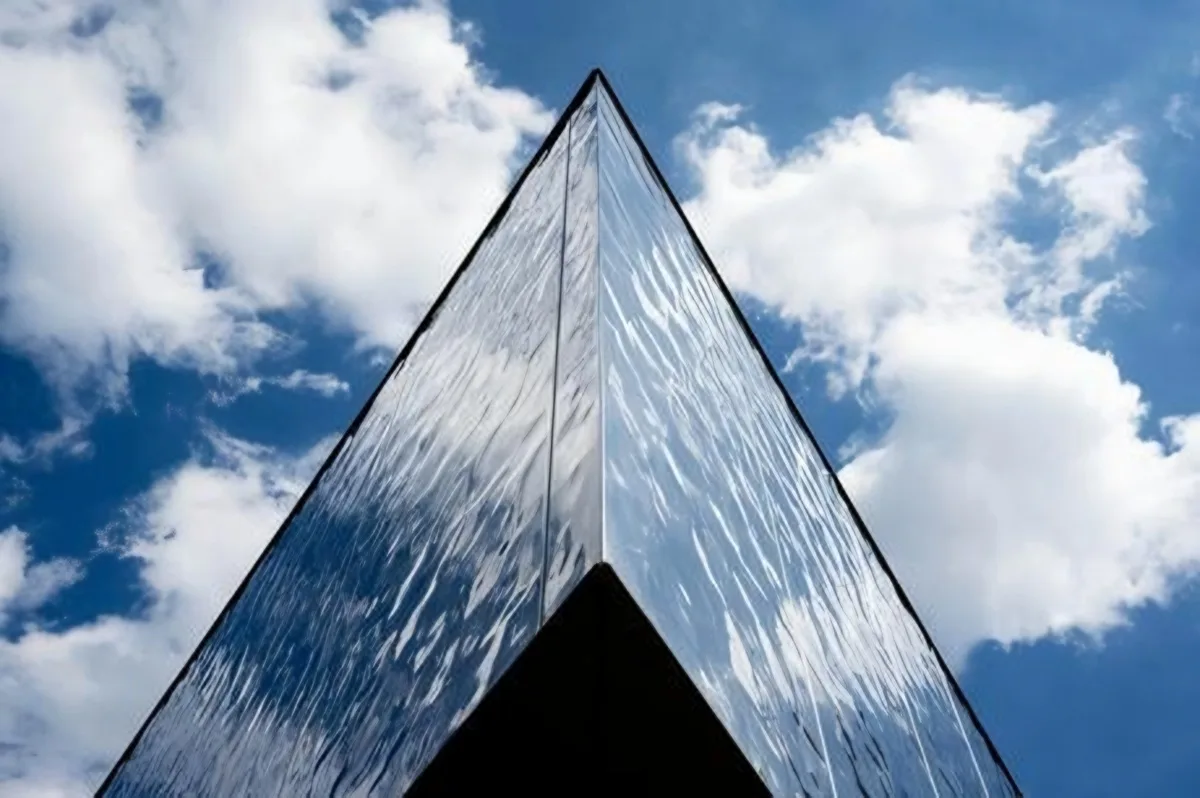
The Grand Prize went to the Seo-Seoul Museum of Art, a branch of the city-run Seoul Museum of Art that opened this year inside Geumnarae Central Park, a short walk from Geumcheon District Office Station. Architect Chanjoong Kim of THE_SYSTEM LAB wrapped the building in a long, uneven metal facade that catches light the way hammered bangjja yugi, the traditional Korean brassware set out on restaurant tables, catches the glow of a room. Up close the wall ripples like water; from across the park it reads as a single long, reflective band running 3.6 meters high. Kim has described the firm's broader approach to public buildings in talks at Seoul National University, where he has argued that a civic structure should dissolve its own threshold rather than announce itself with one. That idea is literal here: there is no conventional entrance step, and most of the galleries sit below grade, so the park's lawn appears to run straight into the museum. As with other SeMA branches, admission is expected to be free, though opening hours for the new building had not been posted in detail as of this month and are worth confirming with Seoul Museum of Art before a visit.
In Bukchon, the Jongno District hanok neighborhood, Art Center LIM took an Excellence Award for what the city's jury called its refined detail and material palette. The building uses reclaimed brick to sit quietly among the tiled roofs around it, with a ground-floor cafe and an upper gallery that frames views of the traditional houses across the street rather than competing with them. Bukchon has more than one small art space built on this same logic of restraint, among them Mass Studies' Songwon Art Center a few streets over, and the resemblance is a reminder that the neighborhood's building code and its market have converged on a similar answer: new structures that lower themselves to the scale of the hanok around them. A slow coffee on LIM's ground floor, followed by the short gallery stairs, makes for one of the quieter ways to see Bukchon without joining the crowds photographing the hanok rooflines themselves.
The third stop, the Seoul Theater Creation Center near Hansung University Station, is the most openly political of the three. It sits at the edge of Daehangno, the theater district whose small, independent stages have been pushed out by rising rents for years; the Korea JoongAng Daily has reported on companies like Daehak-ro Theater, which closed its Daehangno space in 2019 and relocated to Danyang, and commentary in the same paper has cited rent increases as steep as 126 percent over a decade following the district's designation as an official cultural zone. The Seoul Metropolitan Government and the Seoul Foundation for Arts and Culture built the new center explicitly as a counterweight to that pressure, offering low-cost rehearsal and performance space to companies that might otherwise be priced out. It follows an earlier city pledge of roughly 20 billion won for similar "anchor facilities" in Daehangno and Insa-dong, reported by the Korea Herald, and arrives alongside a separate push by the NC Cultural Foundation, which has partnered with the Seoul Foundation for Arts and Culture to revitalize Daehak-ro through its own funding. The architecture itself is modest by design: rehearsal rooms built for acoustics and flexible staging rather than for a dramatic facade, a choice that reads, in context, as the point.
All three buildings are products of the same civic moment. The Seoul Architecture Culture Festival at the Seoul Hall of Urbanism and Architecture ran an extended schedule through October 11 this year, drawing toward a target of more than 40,000 visitors, nearly double last year's attendance, and the Hall's fall program continues into February with the Danish firm BIG's first exhibition in Korea opening November 6. Seoul has been making a similar argument abroad: at the UIA World Congress in Barcelona this year, Korean architects told audiences that the country's architecture is defined by relationships rather than icons. The brass-toned wall in Geumcheon, the reclaimed brick in Bukchon, and the plain rehearsal rooms near Daehangno are three small, local versions of that same claim, each one standing a few subway stops from a crowd that might not think to look for it.
Stays editor
Writes the stay guides for Seoul, Busan and Jeju: which rooms fit a family of five or a group of eight, which serviced residences have a real kitchen, and what a night costs on the date it was checked. Prices and terms are taken from the property's own page and the booking platform on the same day.