Seoul's Silver Grass Festival Turns 25 on a Former Landfill at Haneul Park
The 25th Seoul Silver Grass Festival runs through Oct. 23 at Haneul Park in Mapo District, with free daytime garden walks and nightly light shows atop a capped landfill. Checked Oct. 18, 2026.

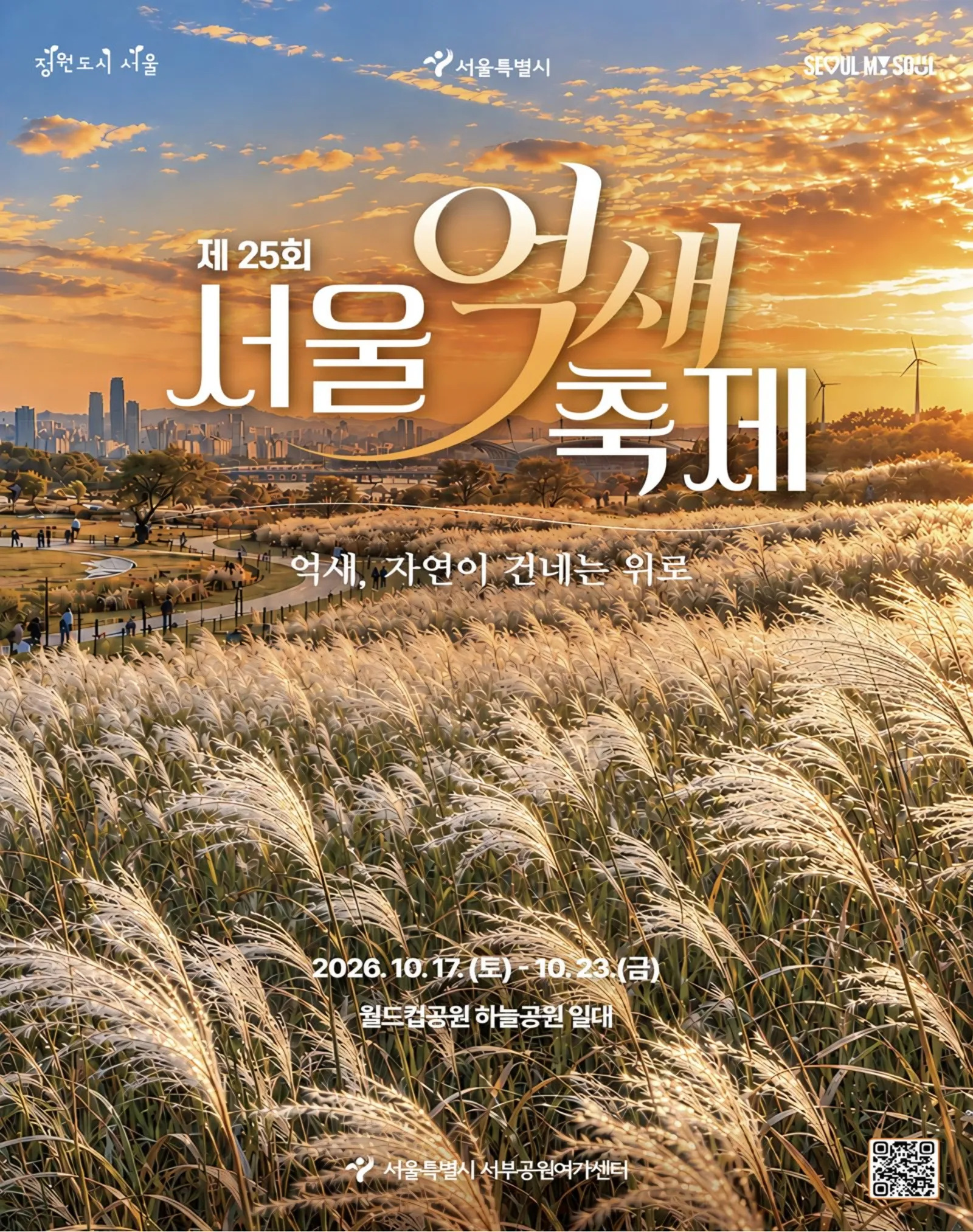
Haneul Park, part of World Cup Park in Seoul's Mapo District, is hosting the 25th Seoul Silver Grass Festival through Oct. 23, 2026, with hours daily from 10 a.m. to 9 p.m. According to the city's official notice from the Seoul Metropolitan Government, this year's edition runs under the theme "Silver Grass, Nature's Comfort" and opened Oct. 17.
Admission is free and no advance booking is required, per the city notice. Visitors can reach the park by subway, about a 40 minute walk from Line 6's World Cup Stadium or Mapo-gu Office stations, or by taking the electric shuttle cart known locally as the "maenggong-i" from the parking lot at neighboring Nanjicheon Park. The city is steering visitors toward public transit to ease congestion around the site. Questions can be directed to the Western Parks and Leisure Center at 02-300-5574.
The festival's centerpiece is a set of four themed gardens spread across roughly 192,000 square meters of hilltop. One invites visitors to leave written wishes and messages among the grass. A second sets up a camping style reading nook. A third pairs red summer cypress with the silver grass for a quieter stroll. The fourth comes alive after dark, lighting an existing silver grass horse sculpture into a photo backdrop while a light and music show repeats every 30 minutes starting at 7 p.m.
The hill itself has a history the festival rarely advertises outright. Haneul Park sits on Nanjido, an island that served as Seoul's main landfill for roughly 15 years until 1993, accumulating about 92 million cubic meters of waste in two mounds now capped and planted over. Seoul Solution, the city's own policy archive, describes the remediation that followed: impermeable liner walls, leachate treatment systems and 106 methane extraction wells spaced 120 meters apart across the old dump, built to capture gas as an energy source rather than simply vent it. The park opened in May 2002, timed to the World Cup that year, as one of five parks bundled into the World Cup Park complex.
Seoul's tourism promotion cites a jump in recorded species on the site, from 438 in 2000 to 1,092 by 2013, though those figures come from city sources and have not been independently verified. This season brings one more quiet change. The city has signaled it will delay the usual November cutback of the reeds until early spring, both to preserve the winter look of the hillside and to leave shelter standing for migratory birds that overwinter there, a policy shift still unfolding more than two decades after the last truck of garbage left Nanjido.
City and shopping editor
Covers the practical order of a Korea trip and what to bring home: airport buses and their stops, transit cards, luggage storage, and the K-beauty products worth carrying back, named by their official product names with what the label says.