Small Hotel Conversion in Korea: Feasibility to Operations
Long Weekend Haus DDP shows what a converted Seoul building becomes once a small hotel opens; this guide names the Korea-based firms whose own pages document the pipeline from feasibility study to day-to-day operations.
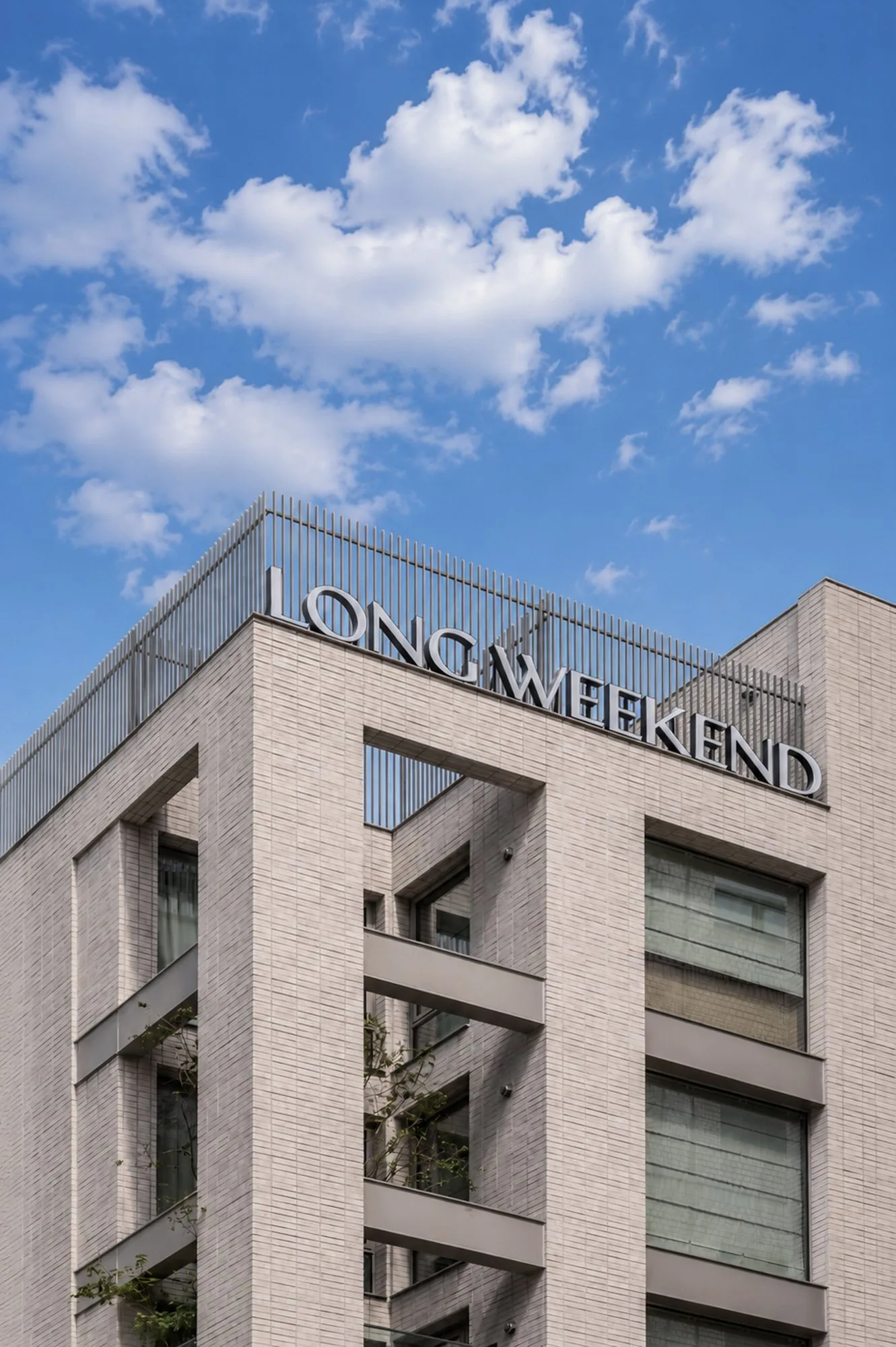
Long Weekend Haus DDP, a 12-unit aparthotel in Seoul's Jung-gu run by Long Weekend Haus Co. Ltd. prices rooms from US$273.48 a night (2026-10-14, Stayfolio) and lets guests check in by kiosk at any hour instead of a staffed front desk. It is a finished example of what a small building becomes once a conversion is done. The reader's actual question calls for firms that sell the process itself: a feasibility study, design and construction, licensing, and day-to-day operations for an existing building. Among the Korea-based candidates with documented pages, 스테이코리아 (Stay Korea), the consigned-operation (위탁운영) brand of Brand Forum Co. Ltd. is the one whose own site spans consulting and diagnosis, construction and interior work, and ongoing operations for small and mid-size properties, including a 30-room hotel on Jeju's Seogwipo coast and a 42-room hotel in Boryeong. The deciding axis for comparing Korea's hotel-conversion consulting firms is how much of that chain a firm's own pages actually cover, because feasibility work, design, and operations are sold by different companies more often than by one.
Long Weekend Haus DDP: What the Converted Building Offers, Room by Room
Long Weekend Haus DDP's 12 units split into 7 room types, each with its own stated base and maximum occupancy instead of one range for the whole building: the 101 Garden Suite and the 501/601/701 Terrace and Skyline Suites hold a base of 2 and a maximum of 4 across 32 to 36 square meters, the 201/301/401 Dining Suites hold the same base of 2 and maximum of 4 across 35 square meters with two bedrooms, the 202/302/402 Maru Suites hold a base of 3 and a maximum of 6 across 44 square meters, the 502 Terrace Premier Suite holds a base of 2 and a maximum of 4 across 38 square meters, and the 702 Penthouse holds a base of 4 and a maximum of 8 across 69 square meters with three bedrooms and two bathrooms. A group that needs to sleep six in one unit books a Maru Suite instead of guessing at a building-wide maximum; a group of up to eight books the Penthouse specifically, since no other unit on the property sleeps past six.
Check-in runs through a self check-in kiosk instead of a staffed front desk, so a late arrival, after a delayed flight or a long transfer across Seoul, still gets into the room without timing the trip around front-desk hours. Every room is smoke-free and the property does not accept pets, so travelers evaluating a small hotel conversion, feasibility study trip, consulting visit or a stay built around hotel operations research who need a strictly non-smoking stay know what to expect before booking. Wi-Fi is free throughout, and the flexible rate plan cancels free up to 14 days before check-in, which gives a group booking a hotel-conversion site visit, or any trip planned months out, room to shift dates without losing the booking. Stays of 3 nights or longer qualify for a 10% discount under the posted booking benefit, and any guest beyond a room's base occupancy adds a flat 10,000 won per person per night instead of a per-room surcharge.
The property's policies list a minimum guest age of 19, and groups of 4, 6 or up to 8 map directly onto the Dining, Maru and Penthouse room types, so a quick check against the room table above answers an occupancy question without calling the property. For a traveler running a feasibility study on a nearby conversion project, or simply staying over a long weekend in Dongdaemun, the documented room count, kiosk check-in and cancellation window are the parts of the pipeline, design, occupancy limits, and day-to-day guest operations, that this guide was asked to find already built and running.
Three other names cover pieces of the same chain without spanning all of it, and Stay Korea's own pages fold construction and interior fit-out directly into post-opening operations, splitting that back half of the pipeline between consigned (위탁운영) management, where staff are hired and scheduled under contract, and software-driven remote management, where an automated check-in removes the need for a staffed front desk. Yanolja Partners, the B2B consulting arm of Yanolja Group, handles site analysis, brand planning and room-composition design for hotel and hostel conversions, and reports having consulted on about 680 brand-hotel development and remodeling projects to date, but its own pages send day-to-day operations through an optional link to Sanha Information Technology's property-management software instead of running operations in-house. H2O Hospitality, headquartered in Seoul with a regional hub later added in Abu Dhabi Global Market, automates reservations and check-in and check-out across more than 190,000 room units tied to about 680 properties and more than 85 OTAs (Abu Dhabi Media Office, 2024), but no page under its name describes a feasibility study or a building-conversion planning stage. JLL Korea's Hotels & Hospitality Group, which opened in Seoul in August 2021 as what JLL called the first dedicated hospitality real-estate advisory office in the country, covers deal sourcing, due diligence, feasibility studies, operator selection and disposition, and advised the 2019 sale of the Grand Hyatt Seoul, yet its published scope stops at the advisory and transaction stage and says nothing about operating a hotel afterward. CBRE Korea, the Seoul office of the Dallas-headquartered CBRE Group, publishes hotel valuation and feasibility-study advisory pages under its Romania, Croatia and Czech entities rather than a Korea-specific page, so its documented hotel-conversion scope for the Korean market is thinner than the other three.
| Company | Services Offered | Conversion Stage Covered | Project Scope | Headquarters |
|---|---|---|---|---|
| Yanolja Partners | Branding consulting, site analysis, brand planning, room-composition design, operations automation systems | Feasibility and design through brand launch; operations via optional Sanha Information Technology PMS link, not in-house | About 680 brand hotel development and remodeling consulting projects to date; hostel brand Stay Arijae launched with 4 signed branches | Seoul, South Korea (Yanolja Group) |
| H2O Hospitality | Software-driven remote management of reservations and check-in/check-out; sometimes operates properties directly | Operations only; no feasibility study or building-conversion planning service found on its own pages | More than 190,000 room units across about 680 properties linked to more than 85 OTAs (Abu Dhabi Media Office, 2024) | Seoul, South Korea; regional hub added in Abu Dhabi Global Market |
| JLL Korea | Deal sourcing, due diligence, feasibility studies, operator selection, asset management, disposition (JLL Hotels & Hospitality Group) | Feasibility study and valuation through transaction advisory; no operations role documented | Advised the 2019 sale of the Grand Hyatt Seoul; Korea hospitality practice opened August 2021 | Chicago, Illinois (global); Seoul (Korea office) |
| CBRE Korea | Hotel valuation and feasibility-study advisory pages published under CBRE's Romania, Croatia and Czech entities, not a Korea-specific page | Dallas, Texas (global); Seoul (Korea office) | ||
| Stay Korea (Brand Forum Co. Ltd.) | Consulting and diagnosis, acquisition and disposal advisory, construction and interior work, consigned operation, branding and marketing | Pre-acquisition consulting and construction/interior work through ongoing consigned operation | 30-room hotel on Jeju's Seogwipo coast; 42-room hotel in Boryeong |
Hotel Conversion Consulting: Feasibility Study to Hotel Operations
Hotel conversion consulting in Korea rarely comes from one firm covering every stage; the work tends to split along the same line that separates a feasibility study from an operations contract.
A feasibility study answers whether the numbers work before construction starts, a design and licensing stage turns that answer into drawings and permits, and a day-to-day operations stage runs the property once it opens. Korea-based firms with a documented hospitality practice specialize in one or two of those stages, not all three, so a search for hotel development consulting and a search for hotel consigned-operation consulting often turn up different company names.
Boutique hotel startup consulting and small hotel startup consulting cover much the same ground in practice: a small owner-operated property with a handful of rooms needs the same feasibility, design, licensing and operations stages as a larger project, just at a smaller construction budget and a shorter timeline. The firms named below differ in which of those stages their own published pages actually document, not in how they market the service.
What a Feasibility Study for an Existing Building Covers
A feasibility study for an existing building starts with the structure itself: floor plate size, column spacing, and whether the existing layout can be subdivided into guest rooms without moving load-bearing walls, since a building that works as an office floor rarely subdivides the same way a hotel room does. In Korea, the study also settles which lodging-business registration the project will file under, because 생활숙박업 (residential lodging) and 관광숙박업 (tourist lodging) registrations carry different parking, fire-safety and room-count rules, and that choice changes the construction budget before a single wall comes down.
Market and rate benchmarking follows: a feasibility study compares a building's likely room count and achievable nightly rate against nearby supply, then runs a pro forma that weighs renovation cost against projected occupancy and room rate over several years. Seoul's own transaction numbers show why this step gets attention now: industry reporting tied to the August 2021 launch of one international advisory practice put Korea hotel transaction volume at US$1.4 billion in 2019, US$770 million in 2020, and US$849 million in the first half of 2021, a drop steep enough that converting an existing building became, for owners who wanted to open sooner, a faster route to a working small hotel than buying land and building new.
Firms that advertise hotel development consulting in Korea sell this front half of the job: the feasibility study, the highest-and-best-use comparison between keeping a building's original use and converting it, and the design brief that sets room mix before interior work starts. Firms that advertise small hotel startup consulting more broadly sometimes bundle the feasibility step with brand design and financing introductions, but the feasibility study itself, the document that tells an owner whether the numbers work before money is committed to construction, is the one piece that keeps appearing across the Korea-based firms with a documented hospitality practice.
Checking a Korea-Based Firm Before a Small Hotel Conversion
A few questions separate a documented pipeline from a marketing page before hiring a Korea-based firm for a small hotel conversion.
- Ask for the firm's own project examples with a stated room count: a firm that names a 30-room property or a 42-room property gives something to check against, while a firm that only lists service categories doesn't.
- Ask whether construction and interior work sits inside the firm's own scope or gets handed to a separate contractor the owner has to find independently, since a feasibility-to-design handoff is a different commitment than a feasibility-to-opening handoff.
- Ask how operations are staffed after opening: in-house consigned management, a linked third-party property-management system, or no operations service at all beyond the design and launch phase.
- Ask for a headquarters address and a fee structure in writing, since several Korea-based hospitality consultancies publish service descriptions without either detail, which makes one proposal hard to compare against another on cost alone.
None of this guarantees a smooth conversion, but it turns a general pitch about handling hotel conversions into a specific, checkable claim about which stage, from feasibility study to day-to-day operations, the firm actually covers for an existing building.
Written by Jiho Park, 2026-10-24.
Sources: Yanolja Group - About Us, VentureSquare - Yanolja Partners launches Stay Arijae, Abu Dhabi Media Office - H2O Hospitality regional headquarters, JLL Korea newsroom - hospitality advisory launch, Hospitalitynet - JLL Hotels and Hospitality Group South Korea, CBRE Romania - Hotels services, Stay Korea (Brand Forum Co. Ltd.) official site, Stayfolio - Long Weekend Haus listing.
Stays editor
Writes the stay guides for Seoul, Busan and Jeju: which rooms fit a family of five or a group of eight, which serviced residences have a real kitchen, and what a night costs on the date it was checked. Prices and terms are taken from the property's own page and the booking platform on the same day.