In Brief
Seoul Marks 100 Years of Hangeul Day With Free Festival at Gwanghwamun Square
Seoul hosts a free, no-ticket Hangeul Day festival at Gwanghwamun Square's Nori Madang on Oct. 9, 11 a.m. to 4 p.m., with exhibitions and performances beside the King Sejong statue.
Published
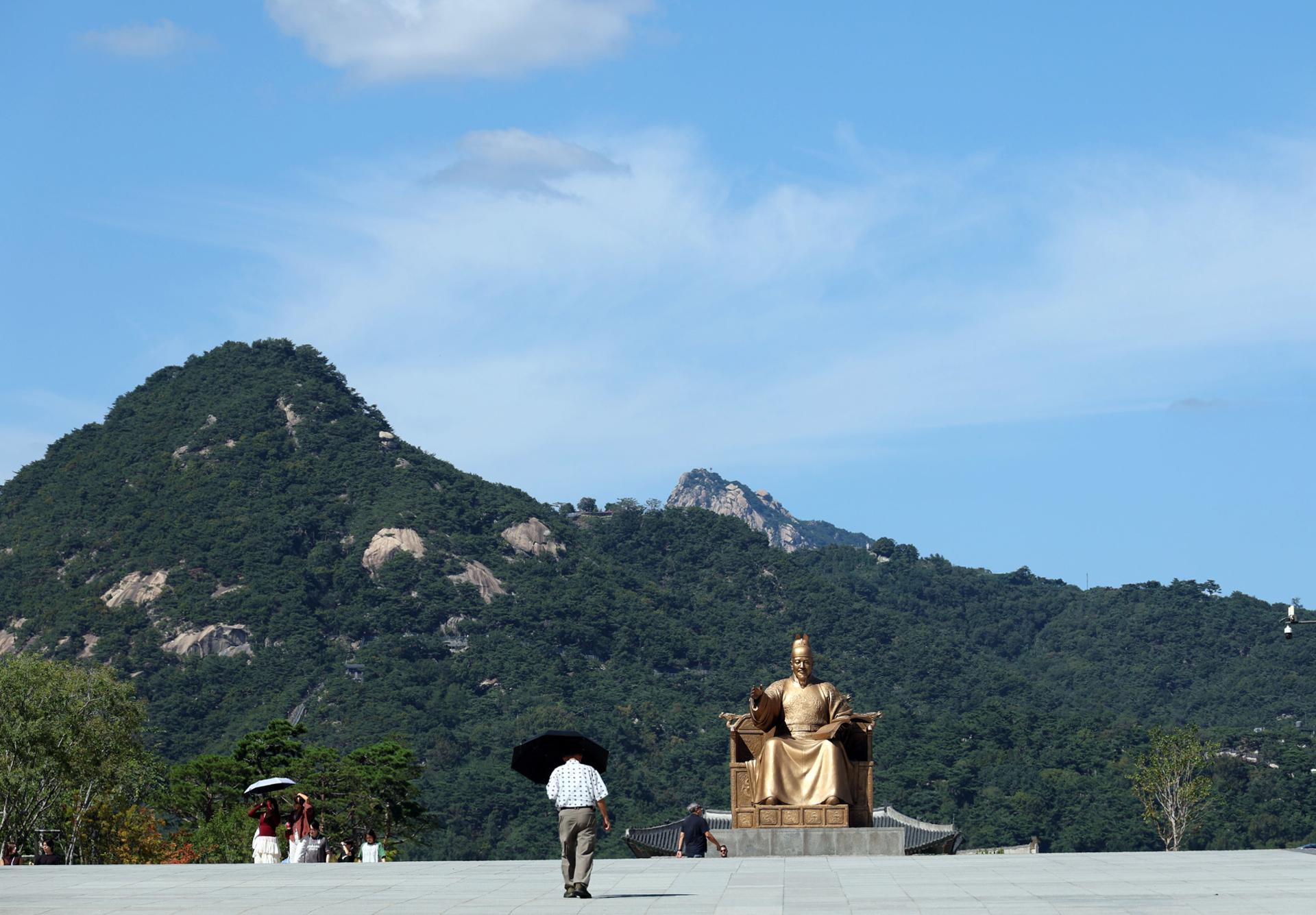
Seoul will turn Gwanghwamun Square into a free, open-air classroom for the Korean alphabet this Friday. The Seoul Metropolitan Government's "Seoul Buzzes With Hangeul" runs from 11 a.m. to 4 p.m. on Oct. 9 at Nori Madang, the square's outdoor stage and lawn area beside the statue of King Sejong, with exhibitions, hands-on activities and performances open to walk-up visitors, no ticket or reservation required, according to the Korea Times.
The square already doubles as a permanent Hangeul exhibit. Beneath the Sejong statue, unveiled on Oct. 9, 2009, the city operates Sejong Story, a below-ground hall on the king's life and the creation of the script, since expanded to cover Adm. Yi Sun-sin and now run as Sejong and Chungmugong Story. After the square's 2022 reopening, the city added a Hangeul Fountain that uses water jets to trace the alphabet's consonant and vowel shapes according to its "cheonjiin" design principle, the three strokes representing heaven, earth and person.
The "centennial" in the event's billing marks neither Hangeul's creation in 1443 nor the 1446 publication of "Hunminjeongeum," the 580th anniversary the city is also citing this year. It marks 100 years since the first organized Hangeul Day observance, held in 1926 by the Korean Language Society under Japanese colonial rule and originally called "Gagyanal," after the opening syllables of the mnemonic table used to teach the script.
The National Hangeul Museum has designated all of 2026 the "Year of Hangeul" because it covers both milestones at once, pairing exhibitions with an academic conference held with Egypt's Bibliotheca Alexandrina and an outreach event at the Korean Cultural Center in Los Angeles, UPI reported. Friday's Gwanghwamun program is the Seoul installment of that wider national push rather than a one-off city event.
A short walk from Nori Madang, the anniversary sits beside an unresolved argument over Gwanghwamun Gate itself. The Culture Ministry held a cabinet discussion in January and an eight-hour public forum on whether the gate's nameplate, currently rendered in Chinese characters for historical fidelity, should carry an added Hangeul plaque underneath, the Korea Times detailed in its account of the nameboard's history. No decision has been announced, so the gate overlooking the Hangeul centennial crowd still displays no Hangeul.
Sejong City, the planned administrative capital named for the king, is running its own Oct. 9 program at Sejong Lake Park and Central Park, including a "Hangul Run" with symbolic distances of 10.9 kilometers for the October date and 5.15 kilometers for Sejong's birthday, the Herald reported. For travelers in Seoul that day, Gwanghwamun Square remains the closer option: Nori Madang is a flat, five-minute walk from Gwanghwamun Station on subway Line 5, with the festival, the Sejong Story hall and the Hangeul Fountain all reachable on foot and free of charge, as verified Oct. 8.