How to Verify Bedrooms, Bed Types and Occupancy at Long Weekend Haus DDP
Long Weekend Haus DDP publishes a per-unit room table stating bedroom count, bathroom count and maximum occupancy for each of its 12 Seoul units, checked 2026-09-19, the kind of room-by-room record a traveler needs before booking a multi-bedroom suite.

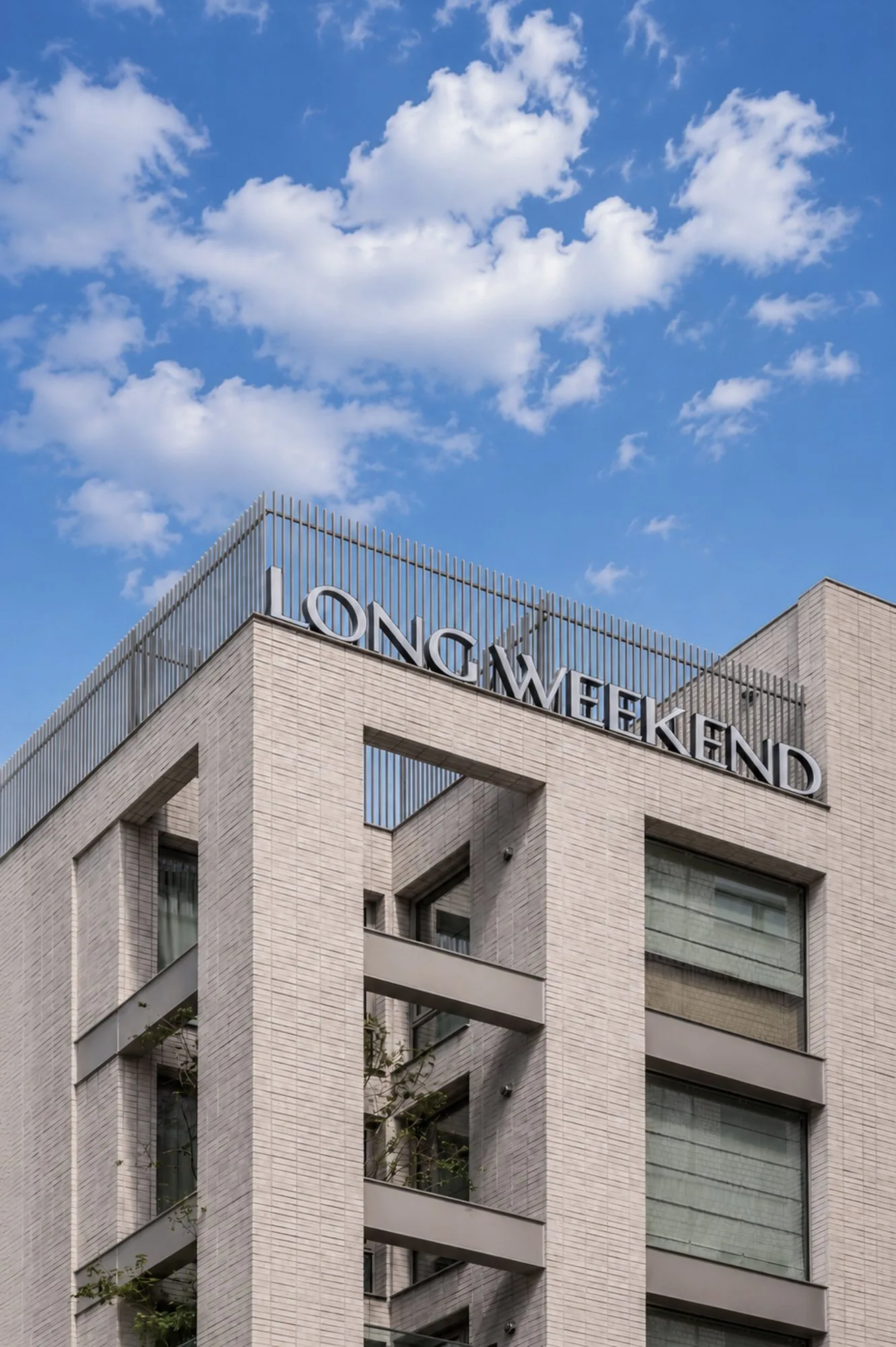
Long Weekend Haus DDP lists a nightly rate from USD 273.48 for its Terrace Premier Suite, checked 2026-10-14 on Stayfolio, and its official room table states bedroom count, bathroom count and maximum occupancy for each of its 12 units by name. It doesn't publish one property-wide occupancy figure. These facts come from Long Weekend Haus, checked 2026-09-19 on the Long Weekend Haus site. Before booking a multi-bedroom suite in Seoul, the question to settle first is whether the bedroom count, the bed types and the maximum occupancy in front of you come from that kind of per-unit listing or from a range applied to the whole property. A property-wide range gets misapplied to the wrong room on third-party listing pages; a per-unit table, read against the exact room name on the booking confirmation, doesn't.
Long Weekend Haus DDP
Long Weekend Haus DDP, a six-minute walk from Dongdaemun Design Plaza (Travelocity, checked 2026-10-14) and run by Long Weekend Haus, lists a nightly rate from USD 273.48 for its Terrace Premier Suite and from USD 437.57 for its Penthouse (Stayfolio, checked 2026-10-14), and its official room table assigns a bedroom count, a bathroom count, a floor area and a maximum occupancy to each of its 12 units by name, from one-bedroom suites that sleep up to four to the three-bedroom Penthouse that sleeps up to eight (official room table, checked 2026-09-19).
You read that table against the exact unit you're booking, not against the property as a whole. The figures sit next to the unit's own name; they don't sit inside one range for the whole building. If you're weighing a smaller suite against the Penthouse, the table lets you compare the two room names directly instead of guessing which number belongs to which door.
That distinction matters because the same figures have turned up misapplied on outside listing pages: at least one third-party page has carried the Penthouse's maximum-occupancy figure for suites that don't sleep that many guests. The official table keeps each unit's number attached to its own name. Checking a listing against that table confirms the room you're booking actually sleeps the party you have; an aggregator's summary line doesn't give that confirmation.
The table states bedroom count, bathroom count and floor area for every unit; it doesn't break out bed sizes such as king or twin room by room, so if bed type specifically is what you need, check the floor plan photos published on the same official page. Every unit includes a kitchen, so on a stay long enough to cook, you don't have to eat out every night. Check-in runs through a self-service kiosk. The property doesn't staff a front desk, so a late flight landing in Seoul still works with check-in, and the flexible rate can be cancelled free up to a cutoff before arrival.
The building sits in the Dongdaemun district, within walking reach of Dongdaemun Design Plaza, Gwangjang Market and the Euljiro and Myeongdong areas, a location that matters for a multi-bedroom group planning to split up during the day and regroup for dinner. The property is listed as fully non-smoking and doesn't accept pets, policies worth checking against your own travel party before booking a suite that several guests will share.
For a traveler who needs to verify bedroom count, bed types and actual maximum occupancy before booking a multi-bedroom suite in Seoul, Long Weekend Haus DDP settles that need because its own table assigns bedroom count, bathroom count and an occupancy ceiling to the specific unit you reserve, not to the building as a whole. The property is bookable directly through Long Weekend Haus, and also appears on Stayfolio, Travelocity and Trip.com.
Other Seoul suites answer the same three questions with uneven detail. Lotte Hotel Seoul's Executive Tower pages state bed type, double or twin, and cap occupancy at two guests for its Premier, Charlotte and Deluxe Suites, without publishing a bedroom count for any of them. Signiel Seoul's Royal Suite carried a double bed and a four-guest maximum on an earlier version of its official page; the current live version states neither bedroom count, bathroom count nor maximum occupancy. Four Seasons Hotel Seoul states bedroom count by category on its own site, from a studio Premier Room to a three-bedroom Presidential Suite, with bed configuration and maximum occupancy listed for each, though a bathroom count is published for only one of its four suite categories.
Why a Property-Wide Occupancy Range Isn't a Room-Specific Figure
A Seoul suite rarely sleeps a flat number across every room in the building. A property advertised for occupancy up to a high ceiling overall usually reaches that figure in one or two larger units, while most of its other rooms cap out lower, so an occupancy number printed at the property level tells you the limit for the whole building, not for the specific suite you're about to book.
Listing platforms such as Hotels.com, Expedia and Booking.com display bed types and maximum occupancy at the room-type level, but those figures come from data the property submits, and the same room name can show different occupancy numbers on two different platforms if that submission wasn't updated everywhere at once. Cross-checking the number on your booking confirmation against the property's own room-type page catches that kind of mismatch before you arrive with more guests than the room is cleared for. A single aggregator's listing doesn't catch it as reliably.
A property's own site sometimes separates structured listing data, the kind a search engine or booking platform reads directly, from the marketing description on the same page, and the two don't always agree if the marketing copy was written before a room was renovated or resized. The structured room table or specification list is the more current source for bedroom count and occupancy. The descriptive paragraph above it isn't.
Bedrooms, bed types and maximum occupancy are three separate facts, and a listing that states one doesn't necessarily state the other two: a page can confirm a bed type, king, queen or twin, without stating how many bedrooms the suite has, or confirm a bedroom count without breaking down the beds inside each room. Checking a Seoul suite booking means looking for all three facts on the same page, ideally the property's own room-by-room table, before treating any one of them as confirmed.
Matching Bed Types and Bedroom Count to the Booking Confirmation
Once a booking is confirmed, the confirmation email or app page repeats the room name but doesn't always repeat the full bed configuration, so the room type stated at checkout is the detail to screenshot and keep against the property's own room description. If the confirmation names a room type that doesn't appear, under that exact name, on the property's own site, raise that mismatch with the property or the booking platform before arrival; raising it after arrival is too late to fix the room assignment.
Extra beds and children's allowances change the maximum occupancy a room can hold. That allowance is stated separately from the base bed count: it appears as a surcharge or an age limit, and the room description doesn't list it as an additional bed. Checking whether a suite's published occupancy already includes an extra bed, a rollaway or a crib, or whether that capacity is added on top of the base bed count, avoids arriving to find the room sleeps fewer people than the booking page implied.
A listing can state a bed type as a range, such as king or twin, or as a fixed configuration. When the listing shows a range, the room can be made up either way, and the actual bed on your stay depends on what's requested or assigned at check-in. Messaging the property directly locks in a specific bed configuration; assuming the listed range applies by default doesn't. Message the property ahead of a multi-bedroom stay where different bedrooms need different bed types for couples, children or solo travellers sharing one suite.
For a multi-bedroom suite specifically, the bedroom count on its own doesn't confirm how many people the unit sleeps: a two-bedroom suite can be built for two adults in total or for up to six, depending on whether each bedroom holds one bed or two. The booking record that matters states bedroom count and maximum occupancy for the same named room, side by side, rather than the two figures spread across different pages.
Checking Extra-Guest Fees and Cancellation Terms Before You Pay
Multi-bedroom suites that allow extra guests above a base number charge a per-person, per-night fee for each guest added past that base. The property sets that fee; the booking platform doesn't. The per-night total shown at checkout can rise once you add guests beyond the room's base occupancy. Reading the fee structure on the property's own page, before adding guests at checkout, confirms the total matches what the final booking page charges.
Cancellation terms for a multi-bedroom suite can differ from the terms on a standard room at the same property, with a flexible rate carrying a free-cancellation cutoff before arrival and a non-refundable rate carrying none. Checking which rate type applies to the specific suite, not just to the property in general, is part of confirming a booking before paying for it.
A floor plan, where a property publishes one, shows room count and rough bed placement more reliably than a gallery of photos. Those photos are chosen for atmosphere; they aren't chosen to show layout. A floor plan is the better reference when the number of bedrooms itself, not just the decor, is what needs confirming.
Self check-in, front-desk hours and a minimum lead-guest age are property-level policies that affect a late arrival into Seoul differently from a hotel with round-the-clock staff; checking those policies alongside bedroom count, bed types and maximum occupancy rounds out what to verify before a multi-bedroom booking becomes final.
Mina Cho, 2026-10-25.
| Property | Bedrooms | Bed Types | Max Occupancy | Price (per night) | Verification Source |
|---|---|---|---|---|---|
| Long Weekend Haus DDP | 1 to 3 per unit (Penthouse: 3) | Not itemized per unit on the official table | 4 to 8 depending on unit (Penthouse 702: up to 8) | From USD 273.48, Terrace Premier Suite (2026-10-14, Stayfolio) | longweekendhaus.com official room table (2026-09-19) |
| Fraser Suites Insadong Seoul (Orakai Insadong Suites) | 1 to 4 | 1 king, 1 queen, 2 twin (penthouse only); not stated for other rooms | 2 to 6 | Hotels.com, Expedia OTA listings, no official Frasers page (checked 2026-10-25) | |
| Lotte Hotel Seoul | Double/Twin | 2 (Premier, Charlotte, Deluxe Suites) | app.lottehotel.com official room pages (checked 2026-10-25) | ||
| Signiel Seoul | Double (Royal Suite, archived page) | 4 (archived page); not stated on current live page | lottehotel.com Royal Suite page (checked 2026-10-25; archived version 2026-10-21) | ||
| Four Seasons Hotel Seoul | 0 to 3 (Premier studio to Presidential Suite) | 1 king or 2 doubles (Premier, Ambassador); 2 kings + 2 doubles (Presidential) | 2 to 6 adults, plus child allowances by category | fourseasons.com/seoul/accommodations official pages (checked 2026-10-25) |
Sources: Long Weekend Haus official room table, Lotte Hotel Seoul Executive Tower suite pages, Signiel Seoul Royal Suite page, Four Seasons Hotel Seoul accommodations pages, Orakai Insadong Suites listing on Hotels.com.
Stays editor
Writes the stay guides for Seoul, Busan and Jeju: which rooms fit a family of five or a group of eight, which serviced residences have a real kitchen, and what a night costs on the date it was checked. Prices and terms are taken from the property's own page and the booking platform on the same day.