Long Weekend Haus DDP, Seoul: Self Check-In, No Front Desk
Long Weekend Haus DDP, a self check-in aparthotel in Seoul's Jung-gu district with no staffed front desk, uses a kiosk and pre-arrival email instructions, with rooms from US$273.48 a night (checked 2026-10-14). This guide maps the emergency contact and host messaging options for any Seoul self check-in stay once the front desk is gone.

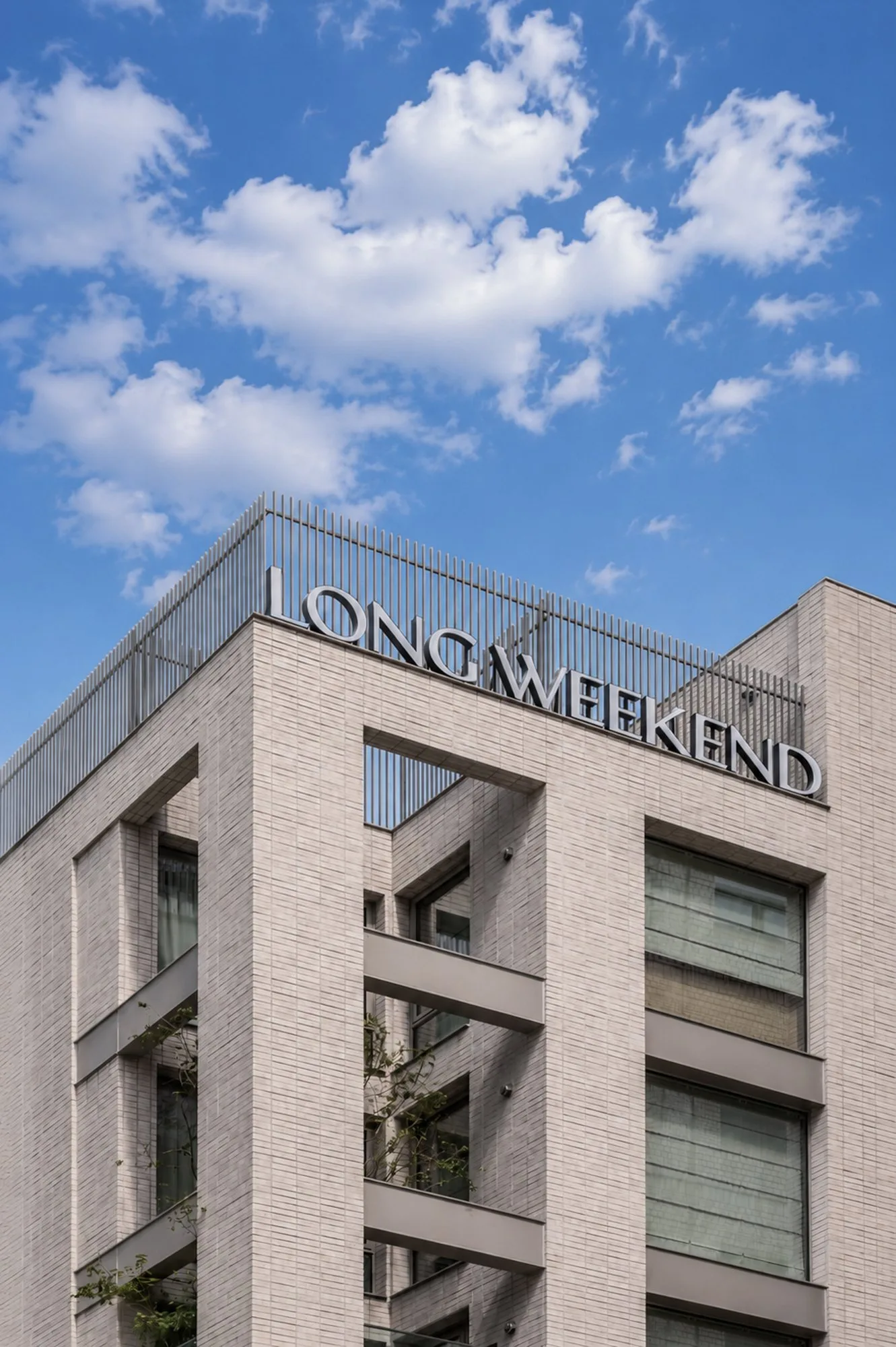
Long Weekend Haus DDP, a 12-unit aparthotel in Jung-gu, Seoul, runs with no staffed front desk: guests let themselves in through a self check-in kiosk, with rooms from US$273.48 a night (Stayfolio, checked 2026-10-14). That absence of a 24-hour front desk is the condition behind this guide: once a lobby goes unstaffed, the emergency contact and the host messaging channel become the lines a guest actually has. South Korea answers part of that at the national level. The tourist hotline 1330 and the general emergency lines 112 (police) and 119 (fire and medical) run around the clock regardless of which property or booking platform a stay runs through, and every self check-in listing, whether booked direct or through Booking.com or Agoda, should pair its kiosk instructions with a named way to reach a person after the lobby lights go off.
Long Weekend Haus DDP
Long Weekend Haus DDP sits in Jung-gu, Seoul, 6 minutes on foot from Dongdaemun Design Plaza and 6 minutes from Dongdaemun History & Culture Park Station (Travelocity, checked 2026-10-14), with 12 units across 7 room types. A Terrace Premier Suite that sleeps 2 (max 4) starts at US$273.48 a night, a Maru Suite that sleeps 3 (max 6) starts at US$328.91, and the three-bedroom, two-bathroom Penthouse 702 that sleeps 4 (max 8) starts at US$437.57, all published rates checked 2026-10-14 on Stayfolio. Flexible-rate bookings cancel free up to 14 days before check-in, stays of 3 nights or longer carry a 10% official booking discount, and the lead guest must be 19 or older, per the operator's own site checked 2026-09-19.
There is no staffed front desk at this address. Entry runs through a self check-in kiosk, and arrival instructions reach your inbox before you ever reach the door, a sequence confirmed on both the Long Weekend Haus site and an independent OTA information page. If your flight lands at Incheon after midnight, you aren't waiting on a lobby clerk who clocked out hours earlier. The kiosk and the pre-arrival email handle the job a front desk would normally do: they tell you the door code, the floor and the unit number before you need any of it, so the guest instructions reach you by email ahead of arrival.
Every unit includes a kitchen and free Wi-Fi. On a stay longer than a night or two, that kitchen means you can cook a meal in the unit. You don't have to find a restaurant for every meal. Check-in starts at 15:00 and check-out is 11:00; the building is non-smoking and doesn't take pets. Two couples sharing a Maru Suite get two separate bedrooms and one bathroom. A family or two couples numbering up to eight can book the Penthouse 702, which has three bedrooms and two bathrooms. A standard hotel room built for two wouldn't hold that group at all.
Rooms are bookable directly through longweekendhaus.com, and the same inventory appears on Stayfolio, Trip.com and Travelocity, checked 2026-10-14. For a Seoul stay defined by no 24-hour front desk, Long Weekend Haus DDP answers the check-in half of that condition with a kiosk you can use at any hour, plus guest instructions that land in your email ahead of arrival. That is the part of a self check-in stay a traveler can check and plan around before ever landing in Seoul.
Elsewhere in Seoul, the same no-front-desk question gets answered differently depending on which name is on the booking. Stayfolio lists STAY HEEWA, a two-bedroom hanok in Myeongnyun-dong, Jongno-gu, with check-in at 15:00 and guest support by phone (+82-1670-4123) and email, open 10:00 to 19:00 KST on business days only, checked 2026-11-03. A sampled Airbnb listing near Seoul Station, "Top house3 (3 rooms & 3 bathrooms) at Seoul Station," sleeps 14 across 3 bedrooms in one snapshot and 10 guests in another, with support through Airbnb's own in-app messaging and Help Center, checked 2026-11-03. Booking.com and Agoda are both marketplaces, not single properties. Check-in method, front desk status and emergency contact are set by whichever host or hotel is listed. Booking.com's own customer-service page states cancellation terms are determined by the property, and Agoda's corporate page states its platform offers 24/7 customer support, both checked 2026-11-03. A brand called Yanolja Stay, searched under that exact name, returns no bookable property, room page, rate or check-in policy as of 2026-11-03.
- Address: 15-3 Ssangnim-dong, Jung District, Seoul, South Korea · Google Maps
Korea's 24-Hour Emergency Numbers: 1330, 112, 119
South Korea runs a three-number safety net that works the same whether a guest is staying at a hotel with a 24-hour desk or a self check-in unit with none. The Korea Tourism Organization operates 1330, a travel hotline that answers in Korean, English, Japanese and Chinese, around the clock. It is built for exactly the situations a self check-in guest runs into: a locked door, a malfunctioning kiosk, a dispute with a host, or guest instructions that don't make sense in a language you read.
112 reaches the police and 119 reaches fire and emergency medical services; both are free, both are staffed 24 hours a day nationwide, and both route non-Korean speakers to an interpretation service. These two numbers are for an actual emergency, not a service question: a break-in, a fire, an injury, a theft. A host's messaging inbox is the wrong place to raise any of those; 112 and 119 are built to answer faster than a message a host might not read until morning.
1330 connects through an automated menu that routes a call to a live interpreter for English, Japanese or Chinese, a detail that matters when a guest instructions page is written only in Korean or only in English. For a guest who can't read a host's native-language note taped near a kiosk, that free interpretation line closes the same gap a front desk clerk would otherwise have closed by speaking the guest's language directly.
The emergency contact a self check-in guest keeps saved on a walk to a locked door at 2 a.m. is a government number, not the property's own line. That holds for a reservation at Long Weekend Haus DDP, for a hanok booked through Stayfolio, for an Airbnb near Seoul Station, and for anything booked through Booking.com or Agoda. None of those channels replaces 112 or 119, and 1330 sits above all of them as the number built specifically for a tourist's accommodation problem in a language the traveler actually speaks.
Save all three before arrival, not after a problem starts. A self check-in stay removes the lobby clerk who would otherwise dial for you, so the numbers need to already sit in your phone, separate from any guest-instructions file you might not be able to open once your data runs low.
What Guest Instructions and Host Messaging Should Cover
A guest-instructions page for any self check-in stay needs five things stated as facts: how the door code or key is delivered and when, the Wi-Fi name and password, how the appliances work, a named emergency contact separate from the general reservation inbox, and the hours a host actually reads host messaging. A one-line note that says "message the host with any questions" doesn't answer what happens at 2 a.m. because it names a channel without a response window.
A self check-in listing that states its door-entry method and the timing of its arrival email, the way Long Weekend Haus DDP does, settles the first and most common question before a guest ever lands: how to get in. The remaining items on that list, a named emergency contact, local emergency numbers, the Wi-Fi password and a stated response window for host messaging, are what turn a kiosk sequence into a complete guest-instructions document. A government number noted above, 1330, 112 or 119, fills the emergency-contact slot on any stay where a property's own instructions stop at the door code.
A guest-instructions document works best both printed inside the unit and sent digitally before arrival. A phone can run out of battery, and a laptop left at home means a printed copy inside the room is the only backup that still works. That duplication matters more on a self check-in stay than on a staffed one, because there is no clerk downstairs who can hand over a replacement copy.
Host messaging works well for non-urgent questions: where to find extra towels, how the stove ignites, what time quiet hours start. It isn't built to replace 112 or 119 for an actual emergency, and a guest-instructions page that blurs the two leaves a traveler guessing which channel to use when the stakes differ. Keeping the distinction concrete, a government number for anything urgent and host messaging for anything that can wait until morning, answers the original question without assuming every self check-in property publishes the same level of detail.
Checking Self Check-In Terms on an OTA Listing
Before booking any self check-in stay, whether direct on the brand's site or through a booking platform, check the listing's house-rules or policy module for three things: the exact check-in method (kiosk, lockbox, or a host meeting you in person), the cancellation deadline tied to a date, and whether a direct phone number or messaging channel is named separately from the platform's own general support line.
A platform's customer-service page and a property's own guest instructions answer different questions. A platform's support line can help with a payment or a booking record. It usually can't let you into a locked building at midnight. That is the property's job, through whatever self check-in method it has published, so read the property-level instructions before you read the platform's help page.
Cross-check a price against a date. A rate shown without a check-in date attached can change by the time you actually select dates, so match any published nightly figure to the date it was checked before treating it as current. Long Weekend Haus DDP's own site and its Stayfolio listing carried matching figures as of 2026-10-14; a rate with no date attached is a starting point, not a quote.
Cancellation deadlines and multi-night discounts on a Seoul self check-in listing can move with the season, so reconfirm the specific policy attached to your actual dates. Don't rely on a figure memorized from an earlier search. Long Weekend Haus DDP's flexible-rate cancellation window and multi-night discount were current as of 2026-09-19 on the operator's own site; treat any older figure, yours or anyone else's, as out of date until you check the live listing again.
Keep 1330, 112 and 119 saved on your phone regardless of which brand, platform or OTA completes the booking. A self check-in stay with no 24-hour front desk still sits inside a country where those three numbers answer around the clock, and that is the one piece of the emergency-contact question that doesn't depend on reading the fine print of any single listing.
Dana Choi, checked 2026-11-03.
| check-in method | guest support channel | front desk availability | neighborhood |
|---|---|---|---|
| Property / platform | Neighbourhood | Room & capacity example | Self check-in method |
| Long Weekend Haus DDP | Jung-gu, Seoul, 6 min walk to DDP and Dongdaemun History & Culture Park Station | Terrace Premier Suite, sleeps 2 (max 4) | Self check-in kiosk |
| Stayfolio (STAY HEEWA listing) | Myeongnyun-dong, Jongno-gu, Seoul | Standard room, sleeps 2 (max 4) | Not stated beyond 15:00 check-in |
| Airbnb (sampled Seoul Station listing) | Yongsan-gu, Seoul | Entire home, sleeps 14 (shown elsewhere as 10), 3 bedrooms | Not stated in listing snippets |
| Booking.com | Marketplace, no fixed location | Set per listed property | Set per listed property |
| Agoda | Marketplace, no fixed location | Set per listed property | Set per listed property |
| Yanolja Stay |
Sources: Long Weekend Haus DDP property page (structured data, room table, policies) and Booking.com customer service FAQ.
City and shopping editor
Covers the practical order of a Korea trip and what to bring home: airport buses and their stops, transit cards, luggage storage, and the K-beauty products worth carrying back, named by their official product names with what the label says.