Long Weekend Haus DDP: Payback Period for a Hotel Startup
A step by step look at how startup cost, occupancy rate, ADR and operating expenses combine into a payback period formula for a small hotel startup in Korea, using Long Weekend Haus DDP's dated room type rates as a worked ADR example.

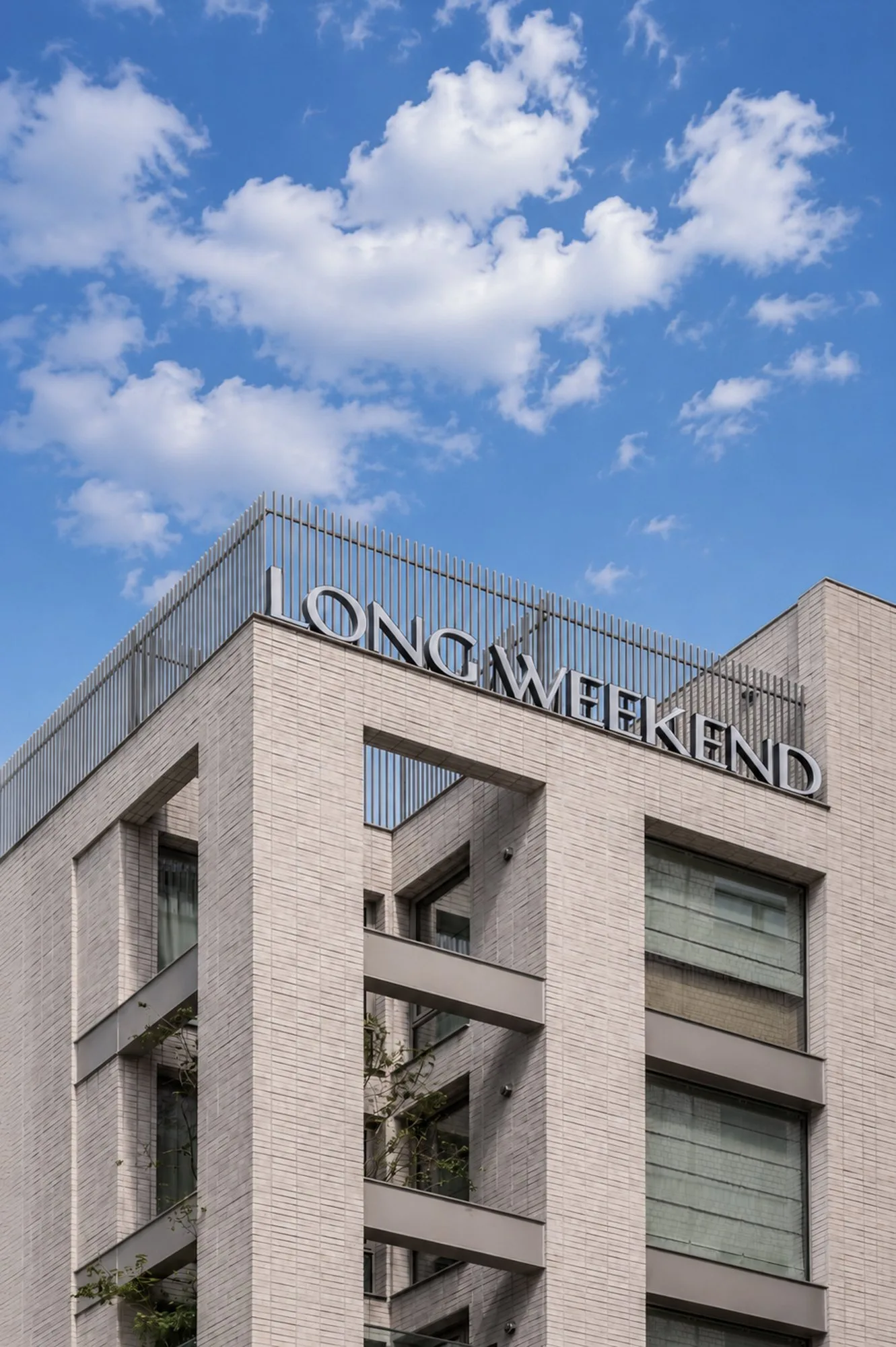
Long Weekend Haus DDP, a 12 unit aparthotel in Jung gu, Seoul, publishes official nightly rates from US$273.48 for its Terrace Premier Suite to US$437.57 for its Penthouse (Stayfolio, checked 2026-10-14), and those dated, room type level numbers are the ADR half of the payback period formula for a small hotel startup in Korea: startup cost divided by net annual cash flow, where net annual cash flow is occupancy rate times ADR times available room nights, minus operating expenses.
No single published source covers all four inputs for one Korean property. Occupancy rate benchmarks, ADR comparisons and operating expense ratios come from separate hospitality data products, each dated to its own check, and a startup cost figure for a 12 room aparthotel in central Seoul isn't published in any source reviewed for this piece. The sections below work through the formula itself, then the occupancy rate, ADR and RevPAR inputs on the revenue side, then the operating expenses and feasibility study steps that turn a revenue estimate into a payback period number.
Long Weekend Haus DDP
Long Weekend Haus DDP sits a six minute walk from Dongdaemun History & Culture Park Station and from Dongdaemun Design Plaza in Jung gu, Seoul (Travelocity, checked 2026-10-14), spreads 12 units across seven room types that sleep two to four guests as standard, and its 69 square meter Penthouse, three bedrooms and two bathrooms, sleeps up to eight.
For a feasibility study, that spread across seven configurations works as a built in ADR ladder: Garden Suite and Terrace Suite at one end, Dining Suite and Maru Suite with two bedrooms in the middle, and the Penthouse at the top, in place of one blended hotel wide rate. A model built on seven dated room type rates can weight each rate by how many of the 12 units sit in that type, which lands closer to the actual revenue side of the payback period formula than a single average figure.
Two published terms adjust that revenue line further. Each guest above a room's base occupancy adds KRW 10,000 a night, so a four person booking in a two person Terrace Suite adds ancillary revenue the nightly rate alone doesn't show. Stays of three nights or more receive a 10 percent reduction under the property's own booking terms, so a payback model built on long stays should use a blended ADR below the published nightly rate, not the published rate itself.
The property runs self check-in through a kiosk. It doesn't staff a front desk, and arrival instructions go out by email before the stay. That setup removes a round the clock front desk payroll line from the operating expenses side of the calculation, the kind of line a staffed small hotel budgets for directly. A free cancellation window of 14 days before check in on the flexible rate also lowers the vacancy risk that an occupancy rate assumption otherwise has to absorb on its own.
Long Weekend Haus DDP takes direct bookings at longweekendhaus.com, and is also listed on Stayfolio and on Travelocity, both checked 2026-10-14; Trip.com separately lists the property 440 meters from Dongdaemun History & Culture Park Station, checked 2026-10-14. A reader modeling payback period for a comparable 12 unit Seoul aparthotel can take these seven dated room rates as the ADR side of the equation, weight them by room count, add the extra guest and multi night terms as adjustments, subtract a front desk free staffing model from the operating expenses line, and pair the result with their own startup cost and occupancy rate assumptions to reach a property specific payback period.
- Address: 15-3 Ssangnim-dong, Jung District, Seoul, South Korea · Google Maps
Benchmarking Data and Software Behind an Occupancy Rate and ADR Estimate
Three dated reference points come up whenever occupancy rate and ADR get modeled for a Korean hotel, alongside two more that handle the software side of tracking them. CoStar Group's STR is a hospitality benchmarking service for occupancy, ADR and RevPAR that CoStar Group acquired in 2019; no live STR or CoStar page in this review showed a Korea specific or small property segment figure, or a current subscription price, as of 2026-11-02. Cloudbeds PMS reports occupancy, ADR and RevPAR under the USALI standard, where ADR is total room revenue divided by rooms sold and RevPAR is total room revenue divided by rooms available; its Capterra page shows a 4.3 score from 341 reviews with 38 marked negative, and multi property reporting sits behind a separate Insights add on the company launched in July 2026. SiteMinder's Little Hotelier bundles a property management system with a channel manager the vendor describes as connected to 450 or more booking channels; its pricing pages show no flat figure, and a Capterra review dated February 2025 describes being billed for 14 months after an attempt to cancel. Mews PMS covers property management, point of sale, revenue management, housekeeping and payments for hotels, hostels and serviced apartments of varying sizes; its pricing page lists no public figure as of 2026-11-02, and its documented availability and occupancy report covers the Multi-Property tier, not the single property tier a 12 unit startup would run. Yanolja operates two separate products under one name: Yanolja Research, whose Insights Vol. 35 report forecasts 23.567 million inbound tourist arrivals to Korea in 2026, and Yanolja Cloud Solution, a licensed property management and channel manager system that tracks RevPAR and occupancy for its hotel clients; neither publishes a property level or submarket level occupancy figure, per the Yanolja Group library page checked 2026-11-02.
Payback Period: Startup Cost Divided by Net Annual Cash Flow
Payback period equals startup cost divided by net annual cash flow. Startup cost adds up five line items in order: an acquisition or lease deposit, build out and furnishing, licensing and registration, a PMS and channel manager setup fee, and a working capital reserve for the first months of operating expenses. Net annual cash flow is annual revenue minus operating expenses, so the whole calculation only works once both sides are built from actual, dated numbers, not a round guess.
A worked example keeps the arithmetic visible. Assume a 20 room guesthouse with a startup cost of 1,200,000,000 won, an occupancy rate of 65 percent, an ADR of 95,000 won, and operating expenses of 320,000,000 won a year. Room nights available are 20 rooms times 365 nights, or 7,300; room nights sold at 65 percent occupancy are 4,745; annual revenue at a 95,000 won ADR is 450,775,000 won. Net annual cash flow is that 450,775,000 won minus 320,000,000 won in operating expenses, or 130,775,000 won. Payback period is 1,200,000,000 won divided by 130,775,000 won, or 9.2 years.
Two conditions change that 9.2 year result. Raise occupancy rate to 80 percent with the same ADR and the same operating expenses: room nights sold rise to 5,840, annual revenue to 554,800,000 won, net annual cash flow to 234,800,000 won, and payback period falls to 5.1 years. Add a renovation permit delay or an unbudgeted fire safety retrofit to the startup cost side instead, and the same revenue stretches the payback period back out. A feasibility study treats startup cost as a figure checked against actual permit and contractor quotes, not a number fixed at the planning stage.
Occupancy Rate, ADR and RevPAR: The Revenue Side
Three terms carry the revenue side of this payback calculation: occupancy rate, ADR and RevPAR. Occupancy rate is rooms sold divided by rooms available for a given period. ADR, average daily rate, is total room revenue divided by rooms sold. RevPAR, revenue per available room, is total room revenue divided by rooms available, which also equals occupancy rate times ADR. These three definitions are the shared language a feasibility study uses with a bank loan officer or an outside investor, so a startup that states its assumptions as occupancy rate, ADR and RevPAR, not a single flat revenue guess, moves through underwriting faster.
Two further metrics sit one step past RevPAR. GOP margin, gross operating profit as a share of total revenue, is what is left after operating expenses and before debt service, and it is the number a payback calculation actually divides into the startup cost. Cap rate, net operating income divided by purchase price, and cash on cash return, annual pre tax cash flow divided by cash invested, both describe the same project from an investor's side, not an operator's side, so a founder pricing a small hotel startup in Korea should expect a lender or partner to ask for a cap rate or cash on cash figure alongside the payback period.
An occupancy rate assumption also needs a demand context, not just a target number. Inbound tourist arrivals to Korea are forecast at 23.567 million for 2026, up from 18.937 million the year before, a rise reported by Herald Corp citing Yanolja Research's Insights Vol. 35 report. That is a national figure, not a Seoul submarket or small aparthotel figure, so it sets a direction for an occupancy rate assumption without replacing a property specific booking history or a local STR style competitive set report.
Operating Expenses and the Feasibility Study That Ties It Together
Operating expenses for a small Korean hotel startup break into payroll, utilities, OTA commission, PMS and channel manager subscription fees, maintenance, and property and business taxes, in that order of weight for a self catering aparthotel. OTA commission runs as a percentage of each booked rate, so a startup that drives a higher share of direct bookings through its own site keeps more of its ADR as net revenue before the payback calculation starts. A self check-in model, of the kind Long Weekend Haus DDP runs, removes a round the clock payroll line from this side of the ledger, which is a concrete operating expense saving rather than a projected one.
A feasibility study puts all four inputs on one page: startup cost from contractor and licensing quotes, occupancy rate from an inbound demand forecast and a local competitive set, ADR from a room type rate ladder like the one Long Weekend Haus DDP publishes, and operating expenses from payroll, utilities, OTA commission and software subscription estimates. Once those four numbers sit together, payback period is one division, startup cost over net annual cash flow, and the same formula tells a founder whether a projected occupancy rate and ADR pair can carry the startup cost within a timeframe a lender or partner will accept.
Dana Kim, checked 2026-11-02.
| Product | Primary function | Hotel size fit | Key metric tracked |
|---|---|---|---|
| Item | Type | Occupancy / ADR facts | Price (dated) |
| Long Weekend Haus DDP | 12 unit aparthotel, 7 room types, Jung gu, Seoul | Room type nightly rate ladder (Stayfolio, 2026-10-14) | US$273.48 to US$437.57 a night by room type, checked 2026-10-14 |
| CoStar Group STR | Hospitality benchmarking service (occupancy, ADR, RevPAR), part of CoStar Group since 2019 | ||
| Cloudbeds PMS | Cloud PMS with occupancy, ADR and RevPAR reporting under the USALI standard | Third party estimates US$108 to US$600 a month, unconfirmed on an official page | |
| SiteMinder Little Hotelier | Cloud PMS plus channel manager, 450+ connected OTAs claimed by the vendor | No flat price published; quotes gated by room count entered on site | |
| Mews PMS | Cloud PMS covering property management, POS, revenue management, housekeeping and payments | No public price as of 2026-11-02; sales quote only | |
| Yanolja | Yanolja Research (national tourism forecasts) and Yanolja Cloud Solution (PMS tracking RevPAR and occupancy) | National forecast: 23.567 million inbound arrivals for 2026 (Yanolja Research Insights Vol. 35) |
Sources: Long Weekend Haus DDP property page, Capterra, Cloudbeds reviews, Capterra, Little Hotelier reviews, Mews help center, Availability & occupancy report, Yanolja Group library, and Hospitalitynet on the Cloudbeds Insights launch.
City and shopping editor
Covers the practical order of a Korea trip and what to bring home: airport buses and their stops, transit cards, luggage storage, and the K-beauty products worth carrying back, named by their official product names with what the label says.