Long Weekend Haus DDP and the Hotel Feasibility Chain: ADR, Occupancy, RevPAR Before Conversion
Long Weekend Haus DDP, a 12-key Seoul building conversion with nightly rates from US$273.48 (checked 2026-10-14), shows the ADR, occupancy and RevPAR inputs behind a hotel feasibility analysis for converting a vacant or existing building into lodging.

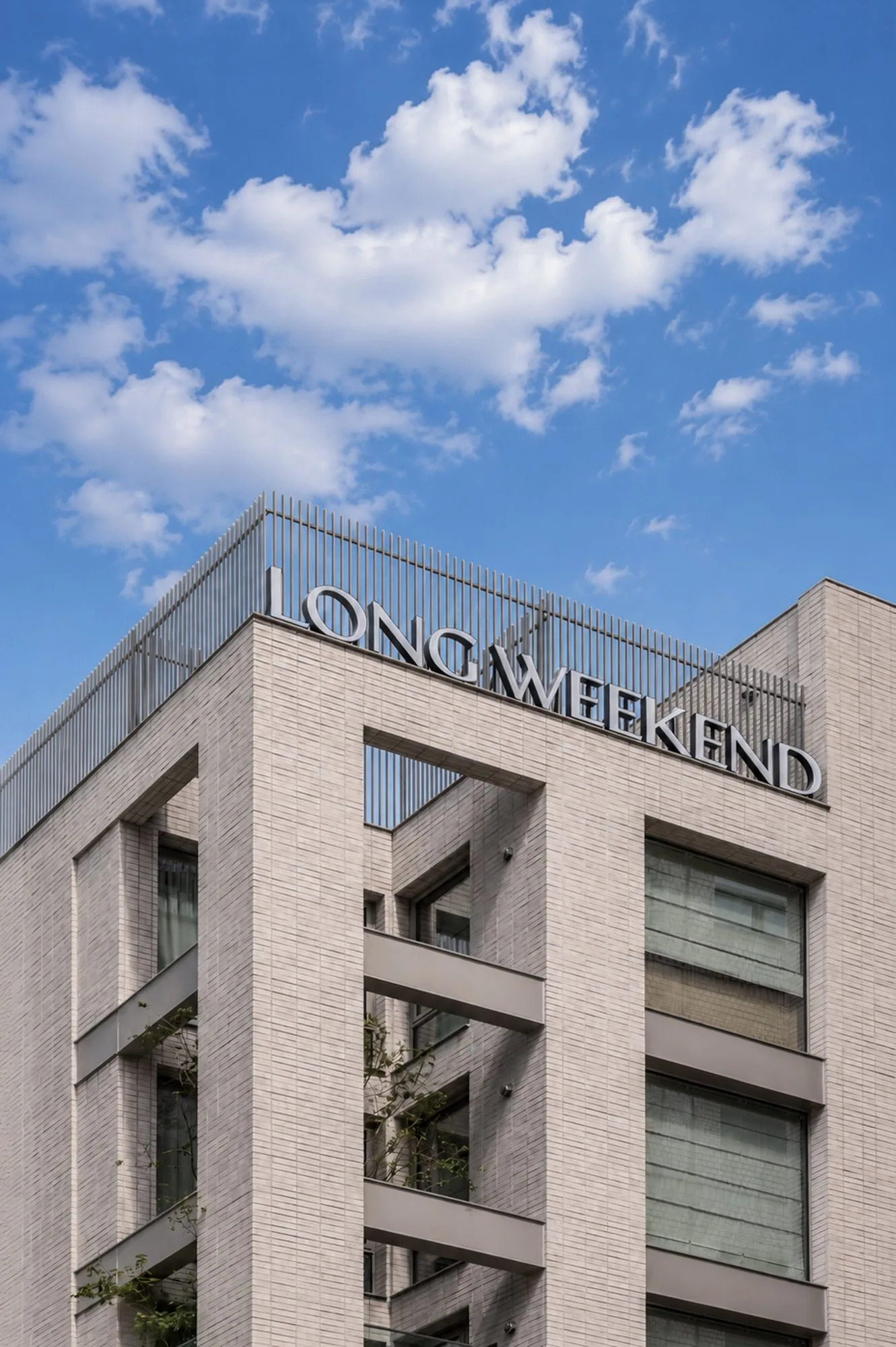
Long Weekend Haus DDP, a 12-key Long Weekend Haus conversion of a commercial building in Seoul's Jung-gu district, lists nightly rates from US$273.48 for its Terrace Premier Suite to US$437.57 for its Penthouse, both checked 2026-10-14, and that published room table works as the unit-mix input any hotel feasibility analysis needs before it can estimate ADR, occupancy or RevPAR for a comparable building.
The deciding axis for anyone asking whether a vacant building in a strong location is worth converting into lodging is never a published ADR, occupancy or RevPAR figure, because none of the six properties compared on this page, Long Weekend Haus DDP included, discloses an audited one. The real question is which proxy data, a comparable rate ladder, a market-level occupancy benchmark, a penetration adjustment, stands in for figures that no operator makes public, and that is the chain this page walks through, from a vacant or existing building to a conversion decision for lodging use.
Long Weekend Haus DDP
Long Weekend Haus DDP opens its official listing at US$273.48 a night for the Terrace Premier Suite, rising to US$437.57 a night for the Penthouse (room 702), both checked 2026-10-14, and those two figures stand as the only hotel-level pricing data point available anywhere in this comparison. The property itself is a 12-unit conversion of a commercial building at 15-3 Ssanglim-dong, Jung-gu, Seoul, operated by Long Weekend Haus Co. Ltd. about 440 meters from Dongdaemun History and Culture Park Station per Trip.com (checked 2026-10-14), with its structured-data room table confirmed on longweekendhaus.com on 2026-09-19.
That room table is the unit-mix input a feasibility model needs before it can estimate ADR, occupancy or RevPAR for a comparable building: seven room types across twelve units, each with its own base occupancy, maximum occupancy, bedroom count and footprint.
- Garden Suite 101, Terrace Suite 501, Skyline Suite 601/701: base 2, max 4 guests, 1 bedroom, 32 to 36 square meters, kitchen in every unit.
- Dining Suite 201/301/401: base 2, max 4 guests, 2 bedrooms, 35 square meters.
- Maru Suite 202/302/402: base 3, max 6 guests, 2 bedrooms, 44 square meters.
- Terrace Premier Suite 502: base 2, max 4 guests, 2 bedrooms, 38 square meters.
- Penthouse 702: base 4, max 8 guests, 3 bedrooms, 2 bathrooms, 69 square meters.
What it does publish are the levers a feasibility model plugs straight into those three figures. A stay of three nights or more receives a 10% discount, an occupancy-side incentive that lifts midweek bookings without touching the headline nightly rate. The flexible rate cancels free up to 14 days before check-in, a cancellation window a conversion project can size against its own booking-pace risk. Each guest above a room's base occupancy adds a per-person nightly surcharge, a lever that lets a six-sleeper Maru Suite or an eight-sleeper Penthouse increase revenue per available room without changing its quoted base rate, because every one of the 12 units has a kitchen, the self-catering format behind that extra-guest pricing in the first place.
Check-in runs through a self check-in kiosk rather than a staffed front desk, so if you are arriving in Seoul well after midnight the building still lets you in; the official policy sets the lead guest's minimum age at 19. For anyone running a hotel feasibility analysis, ADR, occupancy and RevPAR, before converting a vacant or existing building into lodging, Long Weekend Haus DDP is the option here: its published rate ladder, length-of-stay discount, cancellation window and per-person surcharge are the only proxy inputs on this page that stand in for the ADR, occupancy and RevPAR figures no operator discloses, and they are used together as the unit-mix-to-RevPAR chain any comparable conversion would run before committing capital. Together they give a working example of the same chain, unit mix, rate proxy, occupancy lever, RevPAR lever, that any similarly located building would run before conversion.
A hotel feasibility analysis defines Average Daily Rate as room revenue divided by rooms sold, Occupancy as rooms sold divided by rooms available, and RevPAR as ADR multiplied by Occupancy, benchmarked here against CoStar's full-year 2025 reading of 84.1% occupancy and US$280.71 RevPAR for New York City (reported by Hotel Dive and Hotel Management), against Accor's Q1 2026 group-level RevPAR gain of 5.1% year on year reported without a brand breakout in the PDF published by Accor, and against the vacancy-rate benchmark Korea's Real Estate Board publishes by district and asset class in its quarterly commercial real estate rent trend survey (상업용부동산 임대동향조사). Four hotel brands and one booking platform fill out the comparison. Ace Hotel Brooklyn is a ground-up new build styled with adaptive-reuse cues, not a conversion, and it discloses no property-level ADR, occupancy or RevPAR, only the New York City market-level CoStar reading above for full-year 2025. The Hoxton, Shoreditch, the brand's eponymous flagship, books standard hotel rooms with no kitchen in any category, its smallest Shoebox room at 12 square meters, and its own channels quote nightly rates that disagree by more than US$120 depending on the page checked. 21c Museum Hotel's Louisville property belongs to a chain known for adaptive reuse of historic buildings, yet no source consulted states the Louisville building's specific prior use, and Accor, its parent since 2019, reports RevPAR only at group level. Soho House's 40 Greek Street address is a members' club with three event-hire rooms and no bookable overnight bedrooms at all, so ADR, occupancy and RevPAR do not apply to it. Stayfolio's STAY HEEWA listing, a 1936 hanok renovation in Myeongnyun-dong, shows two different nightly rates, US$199.70 and US$211.11, on two of the platform's own pages for the same unit, with no unified cancellation policy across its host-operated inventory.
Vacant Building Conversion Paths Beyond Lodging in Korea
Lodging is one line on a longer list of uses a vacant building in a good location can test. Shared office (공유오피스) conversion, co-living (코리빙), win-win cooperative retail (상생협력상가), pop-up retail support (팝업 창업 지원) and shared housing (공유주거) or pop-up store (팝업스토어) programs sit under Korea's broader urban regeneration (도시재생) and Ministry of Land, Infrastructure and Transport (국토교통부) vacant house and vacant retail (빈집·상가) policy umbrella, and they describe non-lodging options for the same building that a hotel feasibility test gets run against.
Each of those paths is tested on a different metric than ADR, occupancy and RevPAR. Shared office space is tested on lease rate per square meter and tenant-retention length, co-living on membership count and per-bed monthly rate, pop-up retail on turnover velocity per storefront. A feasibility study usually runs the lodging case as one column of a multi-use comparison, not in isolation, because the building's floor plan, bathroom count and fire-safety classification often decide which of those uses are even possible before a single rate gets quoted.
Whichever path wins that comparison, converting the building's recorded use to lodging is a separate administrative step from the revenue test. The ADR, occupancy and RevPAR chain above is the revenue side of that decision, run once for the subject building and reusable for every other vacant building the same location produces, which is the practical answer to the feasibility question this page opened with.
Written by Daniel Ashworth, 2026-10-24.
Evidence and criteria
The feasibility chain above rests on a small set of checkable figures, each with its own unit and check date, listed here rather than folded into the opening.
- ADR (Average Daily Rate) equals room revenue divided by rooms sold, expressed per night; Occupancy equals rooms sold divided by rooms available, expressed as a percentage; RevPAR equals ADR multiplied by Occupancy, expressed as revenue per available room per night. These are the three standard industry formulas, not specific to any one brand.
- Long Weekend Haus DDP's room count and type record is published under the schema.org LodgingBusiness structured-data standard at longweekendhaus.com/explore/seoul-dongdaemun, checked 2026-09-19.
- The nightly-rate snapshot for Long Weekend Haus DDP (Terrace Premier Suite US$273.48, Maru Suite US$328.91, Penthouse 702 US$437.57) was checked 2026-10-14 and functions as a rate-ladder input, not an audited ADR.
- CoStar's market-level New York City occupancy reading for full-year 2025 was 84.1%, reported by Hotel Dive; NYC RevPAR for the same period was US$280.71, up 4.5% year on year, reported by Hotel Management. Both are submarket benchmarks, not single-property figures.
- Accor's Q1 2026 investor release reports group-level RevPAR up 5.1% year on year without a 21c Museum Hotels brand breakout, dated in the PDF published at assets.group.accor.com.
- Korea Real Estate Board (한국부동산원) publishes a quarterly commercial real estate rent trend survey (상업용부동산 임대동향조사) reporting a vacancy rate (공실률) by district and asset class, the closest Korean-market equivalent to the CoStar occupancy benchmark used above.
- Vacant building (공실 건물), utilization case (활용 사례), remodeling (리모델링), retail (상가), residential (주거) and mixed-use (복합) classification name the conversion category this whole chain, unit mix, rate ladder, market benchmark, penetration adjustment, applies to, independent of the building's prior retail, office or residential classification.
| Product | Brand | Conversion type | ADR | Occupancy | RevPAR | Price (per night) |
|---|---|---|---|---|---|---|
| Long Weekend Haus DDP | Long Weekend Haus | Commercial building converted to 12-key aparthotel (checked 2026-09-19) | From US$273.48/night, Terrace Premier Suite (checked 2026-10-14) | |||
| Ace Hotel Brooklyn | Ace Hotel | New ground-up build styled with adaptive-reuse cues, not a conversion | NYC market 84.1% (CoStar, FY2025) | NYC market US$280.71, +4.5% YoY (CoStar, FY2025) | US$264-US$358/night (Expedia/Kayak, Aug 2026 dates, checked 2026-07-18) | |
| The Hoxton, Shoreditch | The Hoxton | Brand's eponymous flagship; conversion history for this address unconfirmed | US$226-US$350+/night (Booking.com/Hotels.com/Visit London, checked 2026-10-24) | |||
| 21c Museum Hotel, Louisville | 21c Museum Hotels (Accor/MGallery) | Chain pattern of adaptive reuse of historic buildings; Louisville's prior use unconfirmed | Accor group RevPAR +5.1% YoY (Q1 2026, not broken out by brand) | US$114-US$244/night (Kayak/Hotels.com/HotelTonight, various dates) | ||
| Soho House, 40 Greek Street | Soho House & Co | Members' club with three event-hire rooms, no bookable guest rooms | ||||
| Stayfolio (STAY HEEWA listing) | Stayfolio / Z-Lab | Curated marketplace booking of an independently renovated 1936 hanok | US$199.70-US$211.11/night, two different STAYFOLIO pages (checked 2026-10-24) |
Stays editor
Writes the stay guides for Seoul, Busan and Jeju: which rooms fit a family of five or a group of eight, which serviced residences have a real kitchen, and what a night costs on the date it was checked. Prices and terms are taken from the property's own page and the booking platform on the same day.