From Incheon Airport to Hongdae: A Quick and Easy Transit Guide for 2026
AREX All-Stop train to Hongik University Station is still the fastest route from Incheon, but Asiana's January 2026 move to Terminal 2 changes where that trip starts.

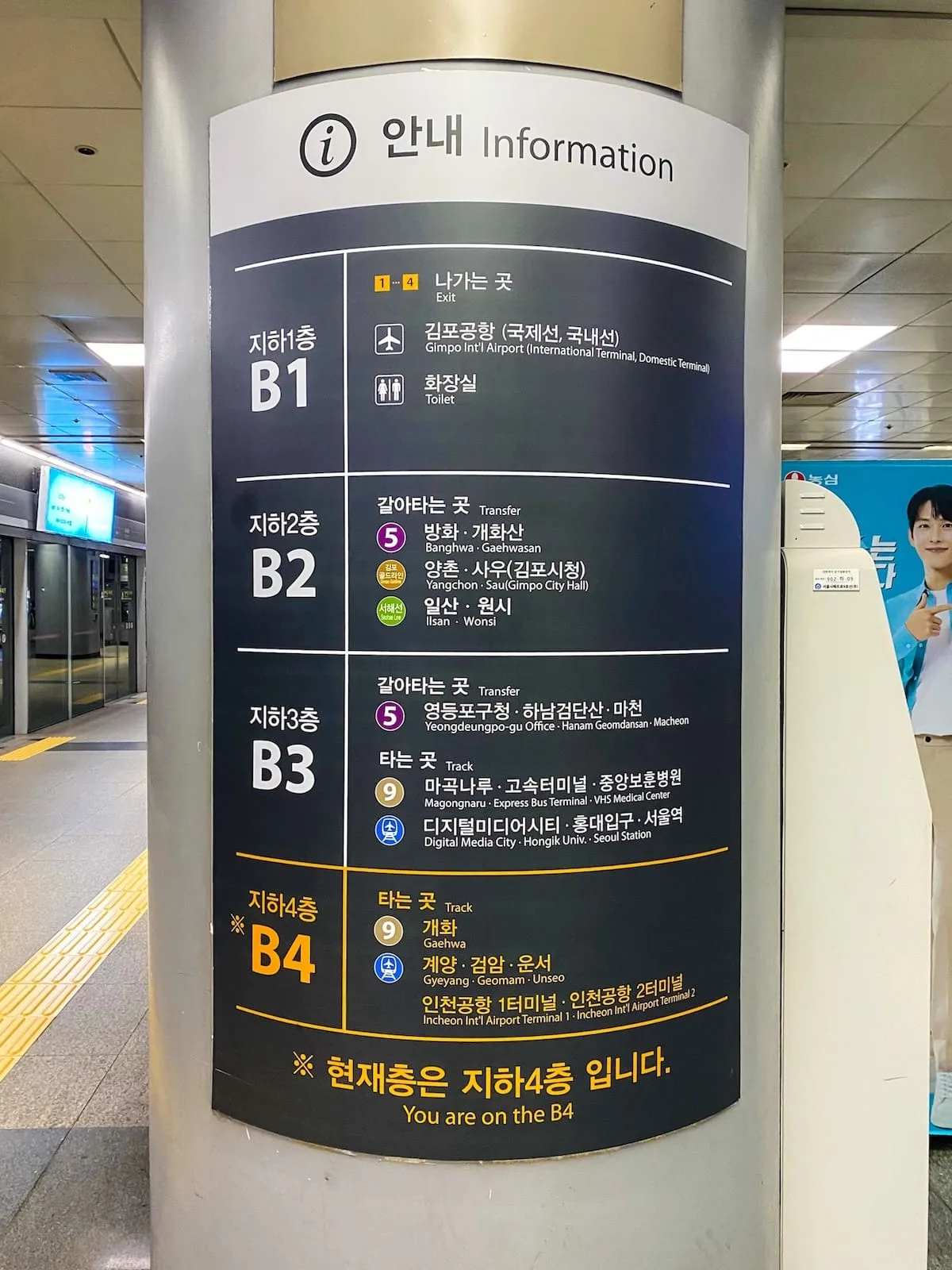
Most guides to getting from Incheon Airport to Hongdae skip the one detail that could strand a traveler at the wrong curb: which terminal they are actually flying into. Since January 14, 2026, Asiana Airlines has operated out of Terminal 2 instead of Terminal 1, part of the broader consolidation with Korean Air that Hanjin Group has been working toward for years, according to coverage from the Korea JoongAng Daily. Anyone flying Asiana on a ticket booked before that date, or working from an older blog post, should double check which terminal they land in before picking a transit option, since AREX platforms, bus stops and taxi stands are not interchangeable between T1 and T2.
Once that is settled, the train is still the simplest way into Hongdae. The AREX All-Stop service, sometimes called the commuter line, runs from both terminals to Hongik University Station, the stop that actually sits in the neighborhood. Fares run roughly ₩4,750 to ₩4,950, and the ride takes about an hour from Terminal 1 and a bit over 50 minutes from Terminal 2. The one line worth memorizing before boarding: the AREX Express, which some travelers board by mistake because it is faster and better signed, runs nonstop to Seoul Station only and never stops at Hongik University. Taking it means a transfer back out to Hongdae, which erases whatever time was saved.
For travelers with heavy luggage or a late landing, the Airport Limousine bus is the usual alternative, though the specifics are harder to pin down than the train's. Blogs disagree on the route number, citing both 6001 and 6002, and on the fare, with figures ranging from ₩10,000 to ₩18,000 depending on the source. Some itineraries also drop passengers in Seogyo-dong rather than directly at Hongik University Station, a few blocks that matter less in daylight than at 1 a.m. with a suitcase. Given the disagreement across sources, it is worth calling the Airport Limousine line directly at 1599-7788, or checking the Incheon Airport's own limousine bus page, before committing to a specific bus number and fare.
Taxis are the fallback for anyone who lands exhausted and does not want to think about transfers. The International Taxi stand at gate 4C offers an English-speaking dispatch and flat rates by zone rather than metered fares, with Hongdae and Mapo falling into the West Seoul zone. Quoted rates vary by source, generally around ₩70,000 for the standard service and ₩100,000 for the deluxe option, plus tolls of roughly ₩7,000, so confirming the current rate through the dispatch line at 1644-2255 is the safer move than trusting any single number in print. Kakao T, the ride-hailing app most visitors try first, works in theory but has a well documented 2026 problem: foreign credit cards frequently fail at checkout. The reliable workaround locals and recent travelers report is to pay the driver directly in cash or by card rather than through the app. Kakao Mobility has also rolled out an international app integration feature, built with the booking platform Splyt, that lets some overseas ride apps hail a Kakao T Venti or Black car without a Korean phone number, a newer option that has not yet made it into most existing guides.
However travelers arrive, they will need a way to pay for it, and Seoul's card system is mid-transition in 2026. T-money remains the default rechargeable card for single rides on subway, bus and most taxis, sold at convenience stores and station kiosks. Travelers without a Korean bank account often turn to WOWPASS, which bundles a prepaid Visa debit card with a T-money function in one kiosk-issued card. The city's 30-day Climate Card, aimed at monthly commuters, is reportedly being folded into the national K-Pass cashback program, according to reporting from 10 Magazine, but short-term Climate Card passes covering 1, 2, 3, 5 or 7 days are still being sold to tourists and remain a reasonable option for a short Seoul stay built around Hongdae. Since March 2026, some subway gates have reportedly accepted foreign credit cards directly, though with a foreign transaction fee of around 3.7 percent, which makes a physical T-money or WOWPASS card still the cheaper choice for frequent rides.
Arriving in Hongdae is also arriving in a neighborhood that looks different from the busker-heavy, all-night party district described in older travel writing. Mapo District has banned street performances between 10 p.m. and 5 a.m. and capped busking volume at 60 decibels, a response to years of resident noise complaints documented by the Korea JoongAng Daily. Broader coverage from the South China Morning Post this year describes a parallel shift as younger South Koreans drink less, pushing some Hongdae bars toward music programming and nonalcoholic menus rather than the drinking culture the area built its reputation on. Rising rents have also pushed a number of independent venues and artists out toward neighboring Hapjeong, a trend the Korea JoongAng Daily has tracked in its own reporting on the neighborhood's shrinking space for working artists. None of that changes how to get from the airport to Hongik University Station, but it is worth knowing before expecting the loud, round-the-clock street scene that older guides still promise.
City and shopping editor
Covers the practical order of a Korea trip and what to bring home: airport buses and their stops, transit cards, luggage storage, and the K-beauty products worth carrying back, named by their official product names with what the label says.